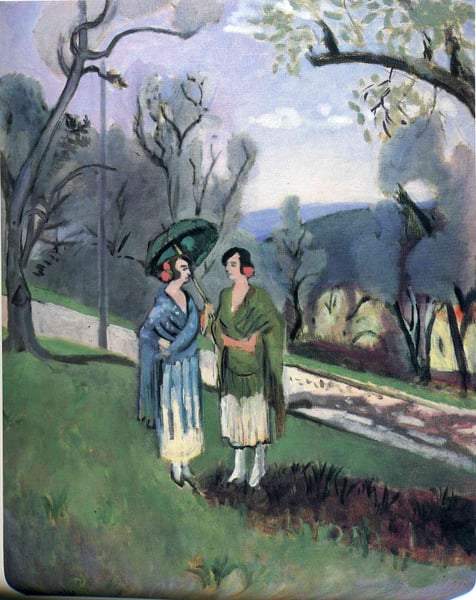
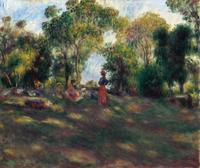
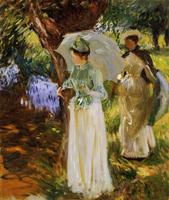
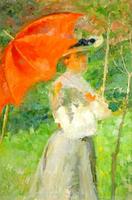
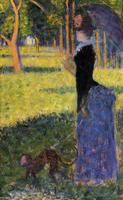
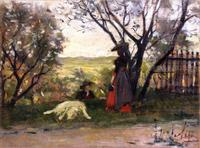
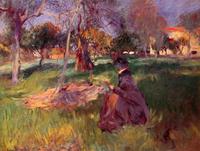
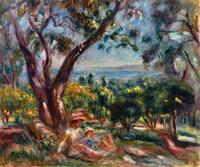
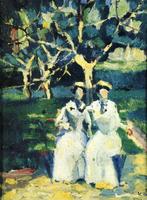
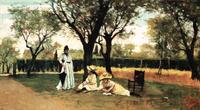
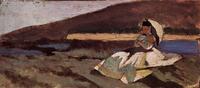
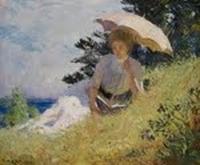
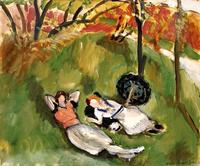
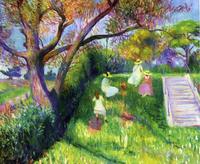
Henri Matisse’s Conversation under the Olive Trees exemplifies the bold color harmonies and expressive simplification that define Post-Impressionism. As a genre painting, it captures a quiet, everyday moment—figures gathered beneath olive trees—yet Matisse transforms the scene through flattened planes of vibrant color and a rhythmic, almost decorative composition. The work is significant within the Post-Impressionist canon for its deliberate departure from naturalistic representation: Matisse uses color not to describe reality but to convey mood and structure, foreshadowing the Fauvist intensity he would soon champion. The olive trees themselves become a pattern of interlocking shapes, while the figures are reduced to essential forms, emphasizing emotional resonance over detailed narrative. This painting demonstrates how Post-Impressionism opened the door to modernism, prioritizing the artist’s subjective vision over literal depiction.