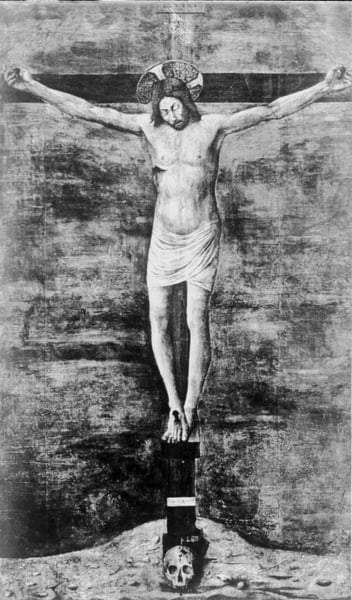
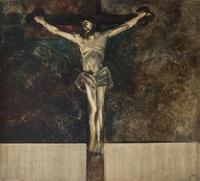
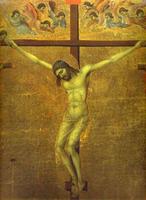
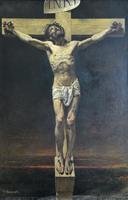
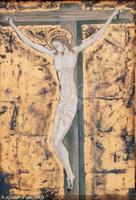
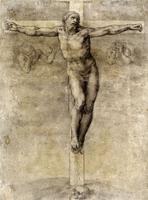
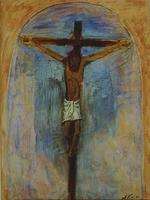
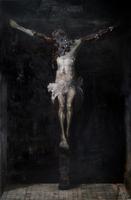
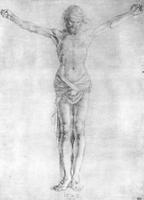
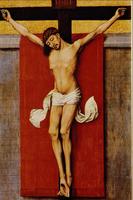
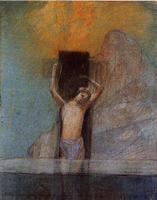
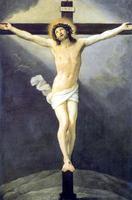
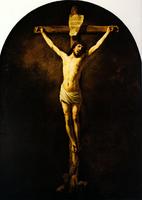
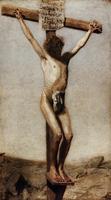
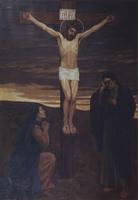
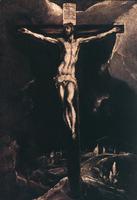
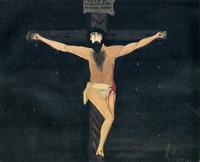
Jacopo Bellini’s Crucifix stands as a pivotal work of the Early Renaissance, exemplifying the period’s shift from the rigid, symbolic traditions of Byzantine and Gothic art toward a more naturalistic and human-centered religious narrative. Bellini, a key figure bridging the late Gothic and early Renaissance in Venice, is significant for his pioneering use of linear perspective and atmospheric space—long before these became standard—which imbues the sacred scene with a tangible, earthly reality. As a religious painting, the work also reflects the era’s deepening emotional engagement: the depiction of Christ’s suffering is rendered with a quiet dignity and physical presence that invites contemplation, while the treatment of figures and landscape anticipates the more dramatic naturalism of his sons, Gentile and Giovanni Bellini. This Crucifix thus marks a critical moment when Venetian painting began to prioritize spatial coherence and human empathy within traditional devotional subjects, establishing a foundation for the High Renaissance to come.