Edvard Munch の Tavern in St. Cloud の専門的な分析
スタイル:Expressionism · ジャンル:genre painting
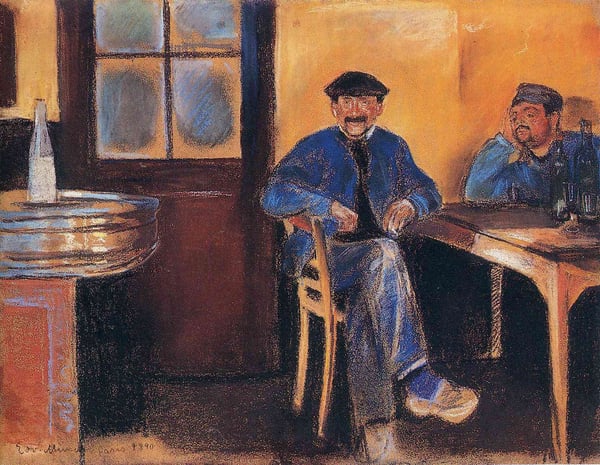
Expert Analysis: "Tavern in St. Cloud" by Edvard Munch
As an early work from Edvard Munch’s European period, Tavern in St. Cloud represents a pivotal moment in the development of Expressionism, moving decisively away from the objective observation of Impressionism and Naturalism toward a deeply subjective, psychologically charged mode of representation. Although the painting falls under the traditional category of genre painting—depicting an everyday interior scene of a tavern—Munch transforms this mundane setting into an emotional landscape that anticipates the core concerns of his later masterpieces.
Significance within Expressionism:
In this work, Munch subordinates realistic detail to the evocation of mood and inner experience. The tavern is not rendered as a sociable, lively space but as a site of isolation, melancholy, or existential unease. Likely painted during Munch’s stay in St. Cloud (a suburb of Paris) in the early 1890s, the piece reflects his exposure to Symbolist ideas and his growing conviction that art should express the artist’s own mental and emotional states. The use of distorted perspective, muted or dissonant colors, and simplified forms—hallmarks of Expressionism—here serve to create a sense of claustrophobia or alienation, even within a public room. The figures, if any appear, are subsumed into the atmosphere; the empty table and tilted floor may suggest human absence or spiritual emptiness.
Significance within its Period (European late 19th/early 20th century):
During a period when European painting was still dominated by Naturalism and early modern movements like Post-Impressionism, Munch’s Tavern in St. Cloud stands out for its radical foreshadowing of the Expressionist revolution. It demonstrates that a seemingly ordinary genre scene can become a vehicle for profound psychological truth—a concept Munch would fully realize in works such as The Scream. The painting also links Munch to the broader fin-de-siècle anxiety across Europe, where urban taverns were often depicted as places of existential retreat or despair. By choosing a tavern in St. Cloud—a location associated with bohemian Parisian life—Munch grounds his emotional intensity in a specific contemporary reality, yet elevates it to a universal symbol of human solitude.
In summary, Tavern in St. Cloud is significant as an early Expressionist statement that redefines genre painting. It marks Munch’s transition from external observation to internal expression, establishing the emotional and stylistic framework that would make him a foundational figure of Expressionism and a central voice in European modern art.
視覚的に類似
構図やパレットが近い作品 20 件
The Drunkards
James Ensor
Two Drunks
Nicolae Grigorescu
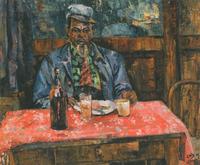
The Pink Table Cloth
Beauford Delaney
Man Waiting
Ottone Rosai
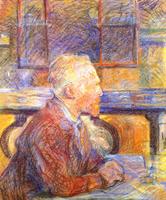
Portrait of Vincent van Gogh
Henri de Toulouse-Lautrec
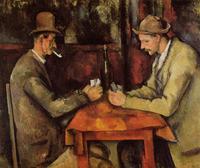
The Card Players
Paul Cezanne
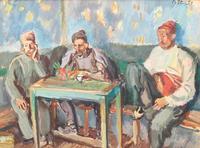
Turks at the Cafe
Iosif Iser
Self-Portrait
Kmetty János
After Work
Camil Ressu
Man Smoking a Pipe
Paul Cezanne
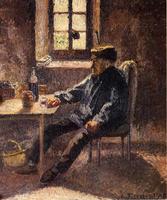
Old Winegrower in Moret
Camille Pissarro
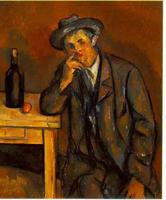
The Drinker
Paul Cezanne
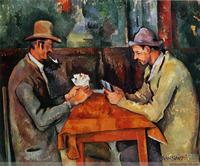
The Card Players
Paul Cezanne
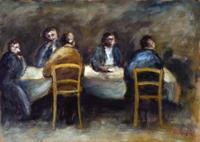
Cinque uomini al tavolo
Ottone Rosai
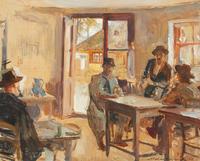
Inn
Nicolae Vermont
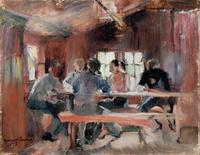
Study for Card Players
Harriet Backer
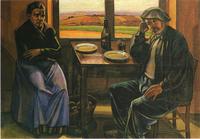
Contadini in Borgogna
Mario Tozzi
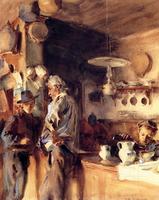
A Spanish Interior
John Singer Sargent
Sommeliere (Waitress in Bistro)
Varlin
Et Bridgeparti
Oda Krohg