Expertenanalyse zu Rogier van der Weydens Saint Columba Altarpiece
Stil: Northern Renaissance · Genre: religious painting
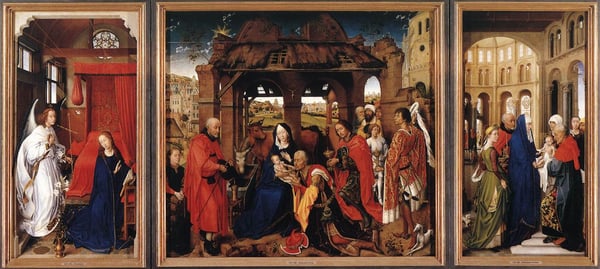
The Saint Columba Altarpiece by Rogier van der Weyden stands as a pinnacle of the Northern Renaissance, a period defined by its obsessive attention to naturalistic detail, luminous color, and profound emotional resonance. Painted around 1455, this triptych (a three-panel altarpiece) is significant for its masterful synthesis of sacred narrative and human vulnerability.
Van der Weyden’s genius lies in how he transforms a conventional religious scene—the Adoration of the Magi in the central panel—into a deeply intimate and psychologically charged moment. The figures are not static icons; they lean, gaze, and touch with a palpable tenderness. The Virgin Mary, dressed in a deep blue that echoes the heavens, presents the Christ Child with a mixture of reverence and maternal fragility, while the eldest Magi kneels in awe, his weathered face a study in devotion. This emphasis on emotional immediacy was a hallmark of van der Weyden and sets his work apart from the more serene, idealized figures of earlier Flemish painting.
The wings of the triptych further demonstrate van der Weyden’s narrative sophistication. The left panel depicts the Annunciation, its crisp, domestic setting packed with symbolic objects (a lily for purity, a candle for Christ’s light) that invite the viewer into a world where the divine is woven into everyday life. The right panel shows the Presentation in the Temple, where the elderly Simeon’s weary yet hopeful expression encapsulates the theme of salvation promised and fulfilled.
From a technical standpoint, the altarpiece exemplifies Northern Renaissance oil painting at its zenith: jewel-like colors, meticulous rendering of textiles (the gold brocade, the crisp white linen), and a convincing sense of spatial depth achieved through overlapping forms and subtle atmospheric perspective. The gold ground of the earliest Gothic altarpieces has been replaced by a naturalistic setting—a ruined stable, a distant city—that grounds the miracle in a recognizable world.
What makes the Saint Columba Altarpiece particularly significant is its lasting influence on later generations of painters. It is a textbook example of how van der Weyden used painterly realism not for mere display, but to intensify the viewer’s spiritual empathy. The work bridges the lingering medieval love of symbol and detail with the Renaissance hunger for human feeling and narrative clarity, securing its place as a cornerstone of Northern European art.
Visuell ähnlich
20 Werke mit ähnlicher Komposition und Farbpalette
Triptych of Jan Floreins
Hans Memling
St. John Altarpiece
Hans Memling
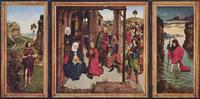
Triptych The Pearl of Brabant. Left wing: St. John the Baptist, middle panel: Adoration of the Magi, right wing: St. Christopher
Dirk Bouts
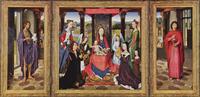
The Virgin and Child with Saints and Donors (The Donne Triptych)
Hans Memling
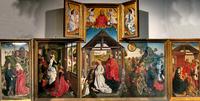
Polyptych with the Nativity
Rogier van der Weyden
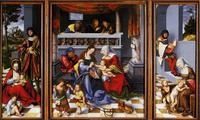
The Holy Family
Lucas Cranach the Elder
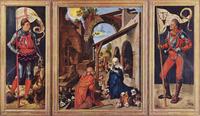
Paumgartner Altarpiece (center panel - The Nativity, wings - St. George, St. Eustace)
Albrecht Durer
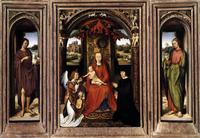
Triptych
Hans Memling
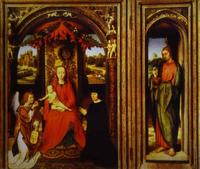
Altar of Saints John the Baptist and John the Evangelist
Hans Memling
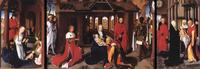
Adoration of the Magi: Whole Triptych
Hans Memling
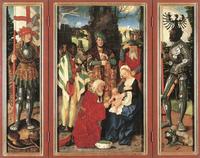
Adoration Of The Magi
Hans Baldung
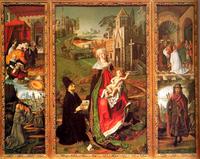
Saint Sebastian
Bartolome Bermejo
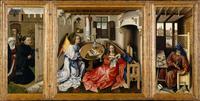
The Mérode Altarpiece
Robert Campin
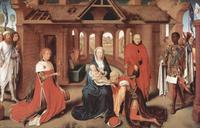
Adoration of the Magi, central panel of the Triptych of the Adoration of the Magi
Hans Memling
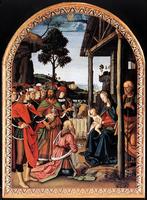
Moses's Journey into Egypt and the Circumcision of His Son Eliezer (detail)
Pietro Perugino
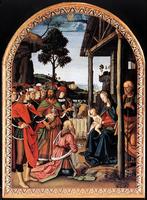
Adoration of the Kings (Epiphany)
Pietro Perugino
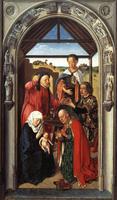
The middle panel of The Pearl of Brabant: Adoration of the Magi
Dirk Bouts
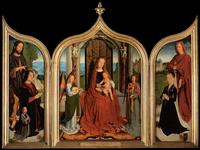
Triptych of the Sedano Family
Gerard David
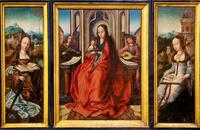
Virgin and Child, Saint Catherine and Saint Barbara
Quentin Matsys
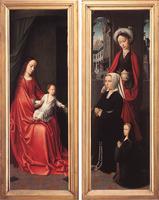
Triptych of Jan Des Trompes (rear of wings)
Gerard David