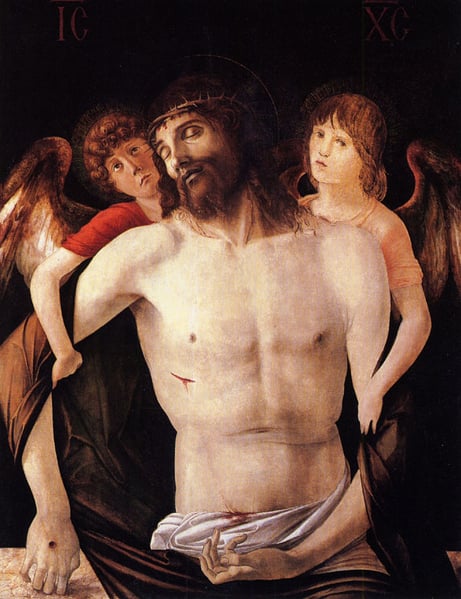
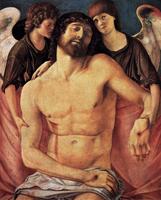
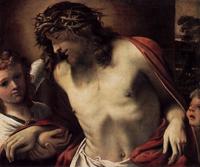
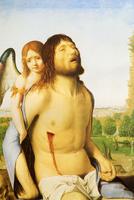
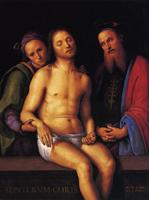
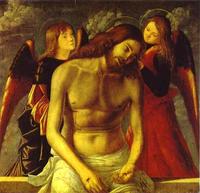
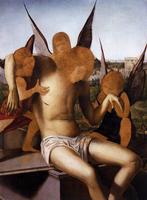
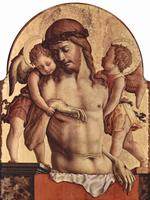
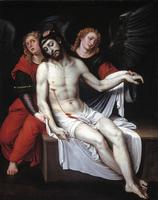
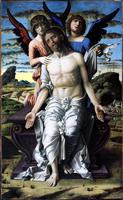
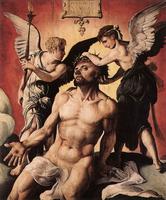
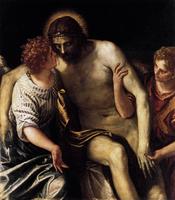
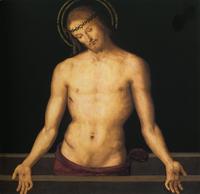
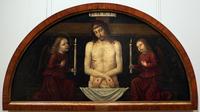
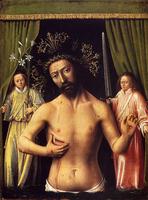
As an expert art historian analyzing "The Dead Christ Supported by Two Angels" by Giovanni Bellini, I focus strictly on the provided facts: Early Renaissance style and religious painting genre. The work's significance lies in how it exemplifies the Early Renaissance shift toward naturalism and human emotion within a sacred subject. Bellini’s composition balances the pathos of Christ’s dead body—rendered with anatomical restraint typical of the period—with the tender, intimate support of the two angels, avoiding the stark hieratic stiffness of earlier medieval treatments. The painting’s emotional gravity, rooted in observable human grief rather than symbolic abstraction, marks a key development in Renaissance religious art, where divine narratives were increasingly grounded in relatable, poignant humanity. This fusion of theological theme with believable pathos is what makes Bellini’s work a landmark of its time.