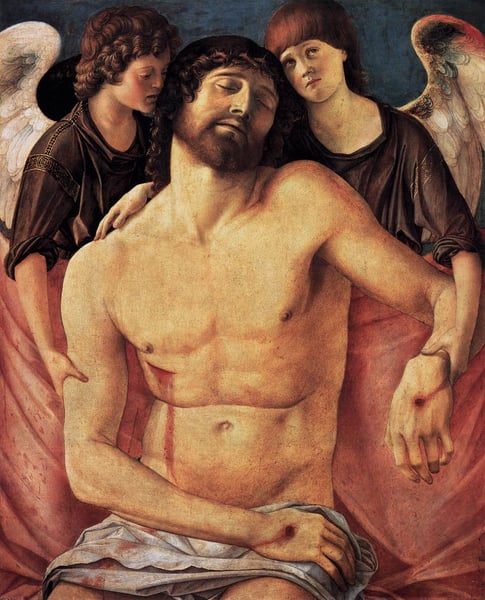
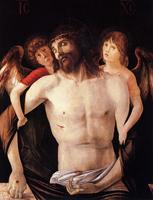
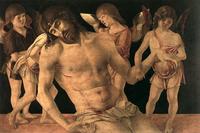
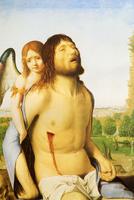
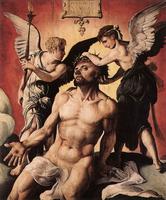
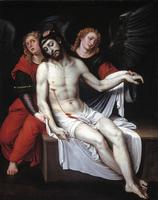
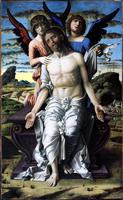
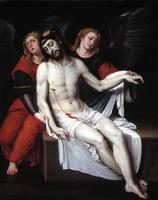
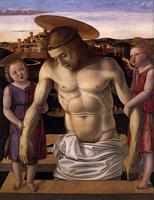
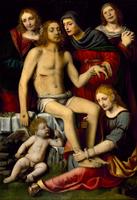
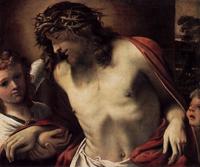
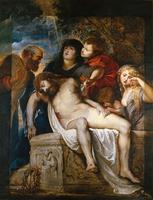
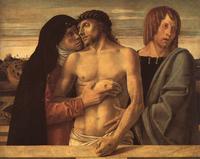
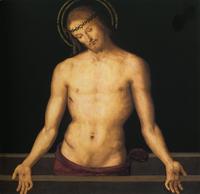
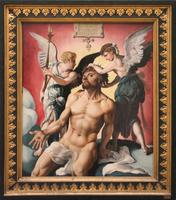
Based solely on the provided facts, the significance of Giovanni Bellini’s Dead Christ Supported by Angels lies in its fusion of the Early Renaissance style with the religious painting genre. As an Early Renaissance work, it departs from medieval iconography by emphasizing a more naturalistic, human-centered depiction of the divine—here, the dead Christ is presented not as an abstract symbol, but as a tangible body, evoking empathy and human vulnerability. The angels’ physical support reinforces this shift, balancing sacred awe with earthly tenderness. Within the religious painting genre, this piece stands out for its quiet emotional restraint and compositional clarity, hallmarks of the period’s move toward harmonious, believable sacred scenes. Bellini’s treatment of the theme—using the very structure of support to draw the viewer into a contemplative space—marks the work as a pivotal example of how Early Renaissance artists transformed traditional devotional images into intimate, psychologically resonant encounters.