Expert Analysis: "Man of Sorrows" by Maerten van Heemskerck
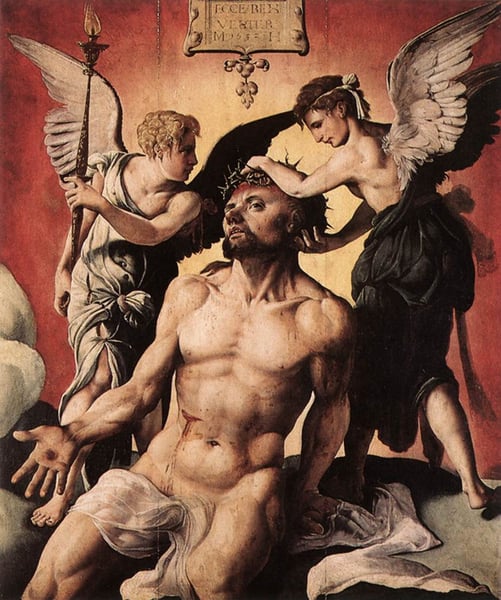
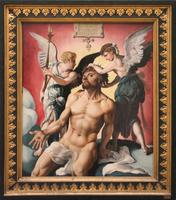
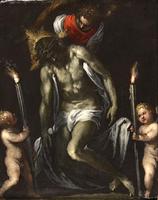
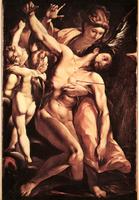
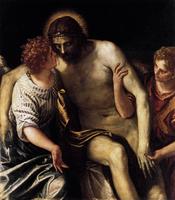
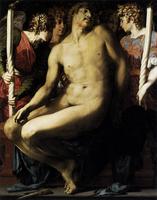
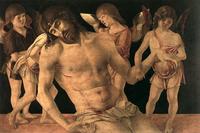
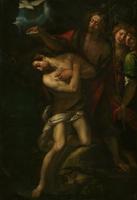
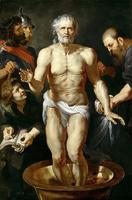
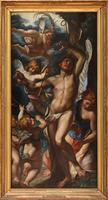
As a prime example of Mannerist religious painting, van Heemskerck’s Man of Sorrows gains its significance from the way it intensifies the devotional pathos of its subject through the distinctive formal language of Late Renaissance Mannerism. The work moves beyond the balanced naturalism of the High Renaissance, instead employing deliberately artificial, elongated proportions and a contorted, tense pose for Christ. This distortion is not a flaw but a calculated expressive tool—it heightens the spiritual anguish and the physical suffering of the moment, making the viewer’s emotional response more immediate and profound.
Van Heemskerck’s handling of the theme also marks a northern European adaptation of Italian Mannerist ideals. While the figure’s musculature and dramatic anatomy recall Michelangelo’s influence, the detailed rendering of wounds and the stark, introspective gaze anchor the image in a Northern tradition of intense, personal piety. The composition likely compresses space and uses stark lighting to isolate the figure, forcing attention onto the wounds and the sorrowful expression. Within the broader context of Mannerism, this work exemplifies the shift from ideal harmony to a more unstable, emotionally charged aesthetic—one that seeks to move the faithful through visual discomfort and spiritual reflection rather than serene beauty.