
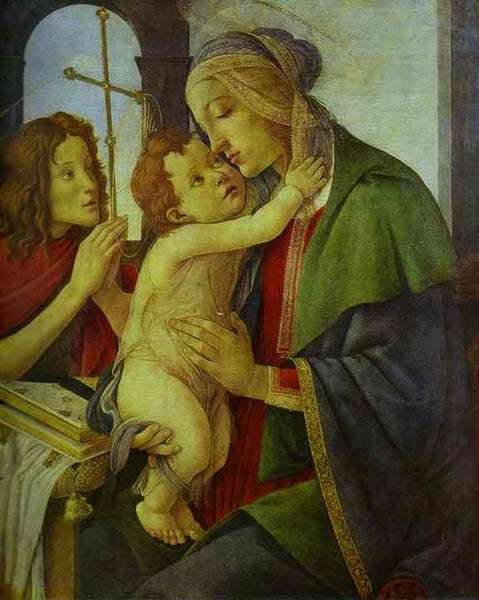
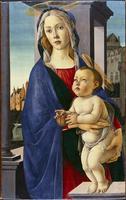
The Virgin and Child with the Infant St. John
Expert analysis of Sandro Botticelli’s The Virgin and Child with the Infant St. John
Style: Early Renaissance · Genre: religious painting
Expert Analysis: "The Virgin and Child with the Infant St. John" by Sandro Botticelli
As an Early Renaissance religious painting, this work by Sandro Botticelli embodies the period’s shift toward humanizing sacred subjects while retaining divine solemnity. The composition unites the Virgin Mary, the Christ Child, and the young St. John the Baptist in a tender, intimate grouping—a hallmark of Florentine devotional imagery of the late 15th century.
Significance within the Early Renaissance Style:
-
Lyrical Grace and Linear Precision: Botticelli’s signature sinuous, flowing lines define the figures’ draped garments and gentle postures, creating a sense of rhythmic movement and ethereal beauty. This linear elegance distinguishes his work from the more solid, volumetric forms of contemporaries like Masaccio, emphasizing decorative harmony over strict naturalism.
-
Emotional and Spiritual Intimacy: The interaction between the Virgin and the two infants—often shown with Christ blessing the young John, or John holding a cross—conveys a poignant human tenderness. This reflects the Early Renaissance interest in making sacred narratives relatable, blending maternal warmth with theological foreshadowing of Christ’s Passion.
-
Refined Use of Color and Light: Botticelli employs luminous, clear colors—pale blues, rose, and gold—reminiscent of tempera technique, with delicate modeling via subtle chiaroscuro. This creates a calm, otherworldly atmosphere that elevates the scene beyond mere genre.
-
Iconographic Significance: The inclusion of the infant St. John, recognizable by his traditional attributes (the cross-staff, camel-hair garment), connects the painting to the biblical prophecy and John’s role as forerunner. This layered symbolism was central to Florentine private devotion, making the work both a spiritual aid and a display of refined patronage.
Conclusion: This painting exemplifies Botticelli’s ability to merge late Gothic elegance with Renaissance naturalism, producing an image that is both stylistically distinctive and deeply devotional. Its significance lies in how it exemplifies the Early Renaissance balance between humanized emotion and sacred formality—a quality that continues to define Botticelli’s contribution to the period.
Visually similar
20 works with related composition and palette
The Madonna and Child with the Infant Saint John the Baptist
Sandro Botticelli
Madonna and Child
Sandro Botticelli
Madonna of the Book
Sandro Botticelli
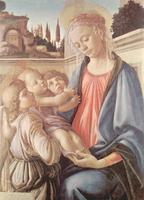
Madonna with two angels
Sandro Botticelli
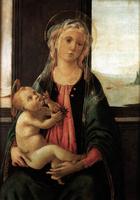
Madonna of the Sea
Sandro Botticelli
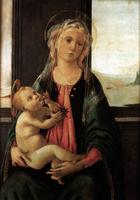
Madonna del Mare
Sandro Botticelli
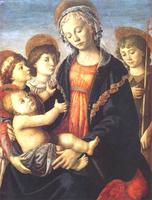
The Virgin and Child with Two Angels and St. John the Baptist
Sandro Botticelli
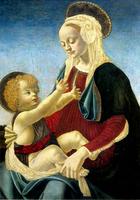
Madonna and Child
Andrea del Verrocchio
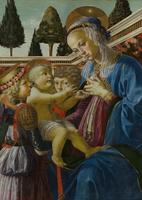
Madonna Lactans
Andrea del Verrocchio
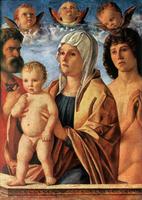
The Virgin and Child with St. Peter and St. Sebastian
Giovanni Bellini
Madonna and Child
Andrea del Verrocchio
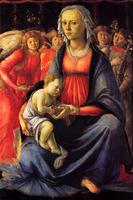
The Virgin and Child surrounded by Five Angels
Sandro Botticelli
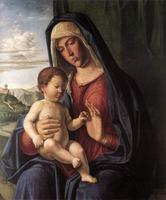
Madonna and Child
Cima da Conegliano
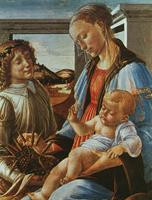
Madonna and Child with an Angel
Sandro Botticelli
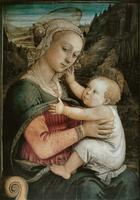
Madonna and Child
Filippo Lippi
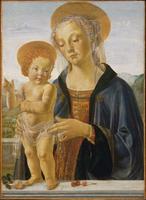
Madonna and Child
Andrea del Verrocchio
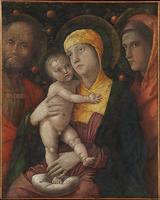
The Holy Family with Saint Mary Magdalen
Andrea Mantegna
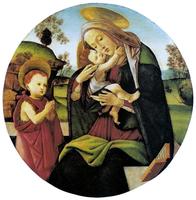
Virgin and Child with the Infant St. John the Baptist
Sandro Botticelli
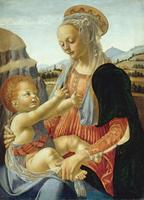
Madonna and Child
Andrea del Verrocchio
The Virgin and the Child
Sandro Botticelli