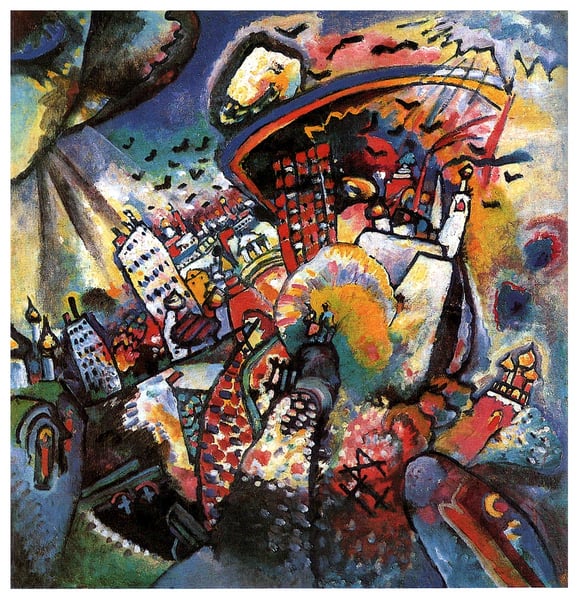
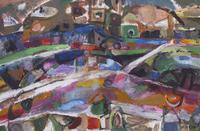
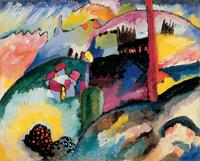
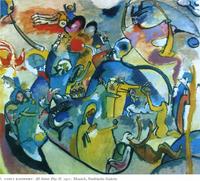
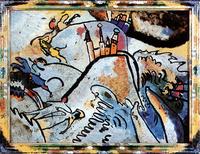
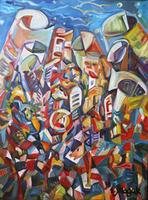
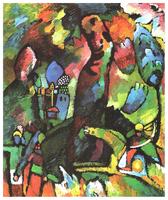
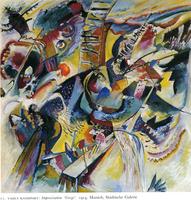
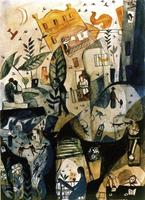
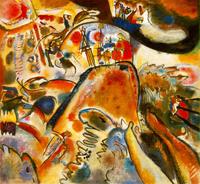
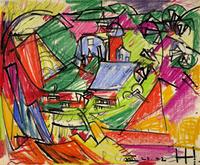
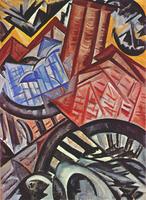
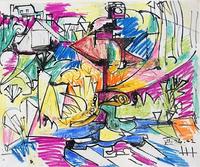
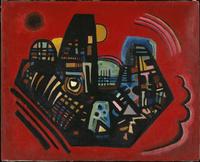
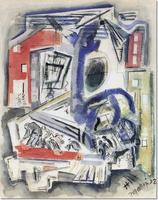
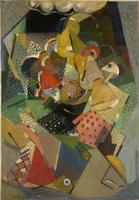
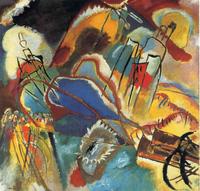
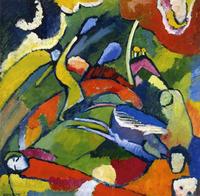
As an Expressionist cityscape by Wassily Kandinsky, "Moscow I" is significant for its radical departure from realistic representation toward subjective emotional expression. Within the Expressionist style, Kandinsky eliminates naturalistic detail and instead uses bold, dissonant colors and dynamic, sweeping forms to convey the visceral energy, rhythm, and spiritual atmosphere of the city. This work exemplifies how Expressionism transforms an urban subject into a vehicle for inner feeling: Moscow is not documented but felt — its architecture, movement, and light are distilled into an abstracted, emotionally charged composition. Kandinsky’s treatment here is pivotal as it bridges his early Impressionist influences with his later pioneering move into pure abstraction, demonstrating how even a familiar cityscape can become a canvas for psychological and spiritual revelation.