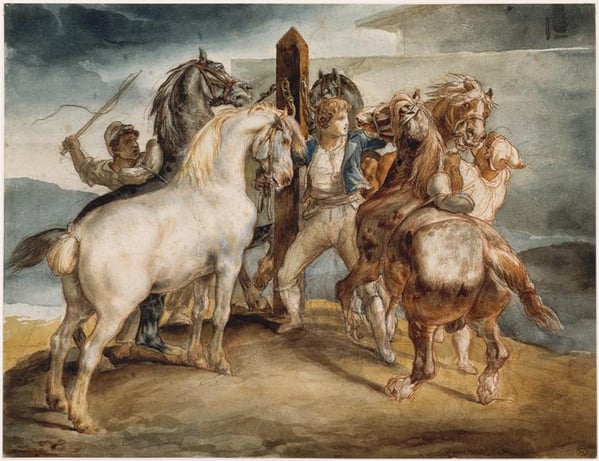
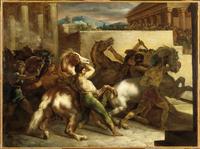
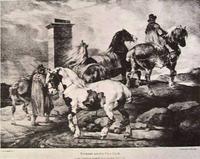
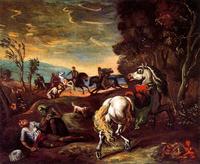
The significance of Théodore Géricault's The Horse Market: Five Horses at the Stake lies in its quintessentially Romantic treatment of the animal subject. As an animal painting within the Romantic movement, the work moves beyond mere naturalistic observation to capture raw emotion, physical strain, and untamed energy. The "stake" implies bonds and restraint, heightening the tension between animal vitality and human control—a core Romantic theme of struggle against constraint. Géricault’s dynamic composition and emphasis on muscular form and agitated movement align with the period’s fascination with the sublime and the primal forces of nature. Unlike the placid livestock of earlier animaliers, this piece foregrounds drama and psychological intensity, elevating the horse from a genre prop to a symbol of passion and suffering. Its significance is thus twofold: it exemplifies Romanticism’s break with neoclassical calm, and it positions animal painting as a vehicle for exploring existential struggle.