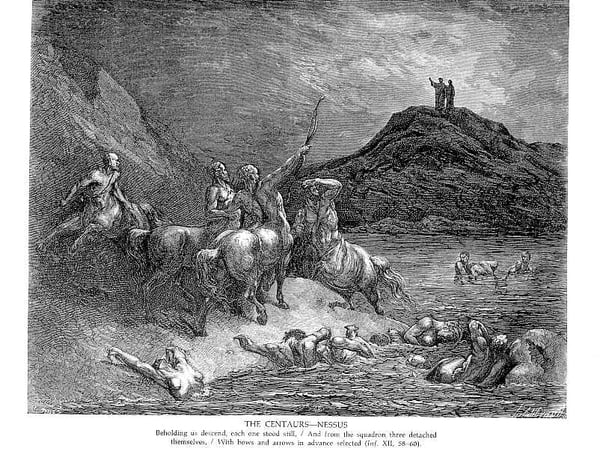
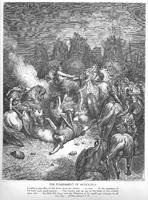
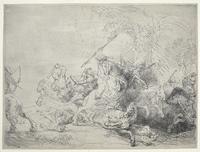
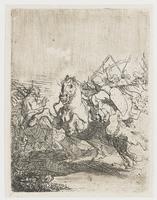
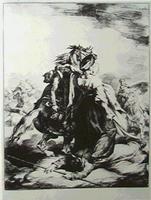
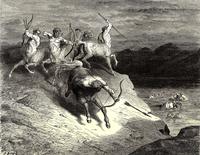
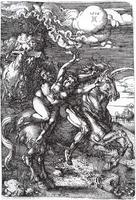
Gustave Doré’s The Centaurs—Nessus is a striking example of Romanticism executed within the illustration genre. Its significance lies in how Doré harnesses the Romantic fascination with mythological drama, emotion, and raw physicality to transform a narrative moment into a visually arresting tableau. The composition is charged with dynamic tension—the centaur’s twisted posture and the turbulent landscape evoke both the supernatural and the sublime, hallmarks of Romantic sensibility. As an illustrator, Doré elevates the medium beyond mere accompaniment; his meticulous linework and dramatic chiaroscuro imbue the scene with a sense of epic scale and psychological intensity. This work exemplifies Romanticism’s interest in classical myth as a vehicle for exploring human passion, struggle, and mortality, while also showcasing Doré’s unparalleled ability to convey motion and emotion within a confined illustrative space.