Analisi esperta di Lord Graham, Thomas Philip Robinson di Jean Auguste Dominique Ingres
Stile: Neoclassicism · Genere: portrait
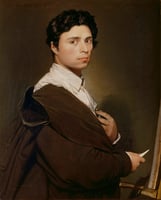
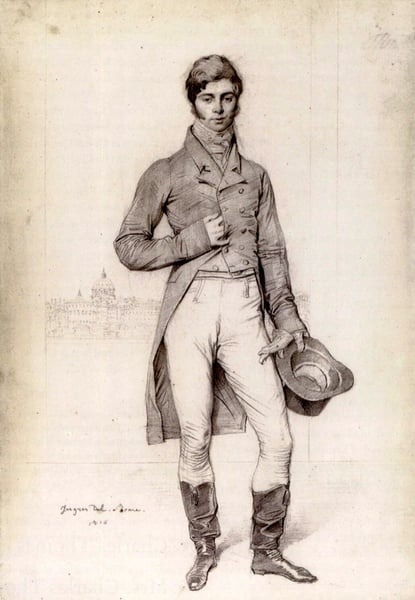
This portrait of Lord Graham, Thomas Philip Robinson by Jean Auguste Dominique Ingres is a masterful example of Neoclassical portraiture, demonstrating the artist’s unwavering commitment to line, clarity, and idealized form—the very hallmarks of the style. Painted during Ingres’s mature period, the work is significant for its seamless fusion of classical composure with acute psychological realism, a balance that distinguishes Ingres’s best portraits from the more rigid works of his contemporaries.
Key Elements of Significance
1. Neoclassical Ideals and Precision of Line Ingres believed that drawing was the probity of art, and this portrait exemplifies his obsession with crisp, flowing contours. The sitter’s silhouette is rendered with surgical precision—the clean curve of the jaw, the sharp line of the collar, and the elegant drape of the cravat all create a sense of ordered, timeless beauty. This linear purity anchors the sitter in the Neoclassical tradition, evoking the marble busts of ancient Rome while maintaining the immediacy of a living presence.
2. Psychological Restraint and Social Elevation Unlike Romantic portraiture’s emotional turbulence, Ingres conveys inner life through formal restraint. Lord Graham’s direct, calm gaze suggests confidence and intellectual poise, befitting his aristocratic station. The subtle modeling of the face—soft shadows without harsh chiaroscuro—gives the skin a porcelain-like delicacy, while the slightly pursed lips and erect posture communicate composure and authority. Ingres elevates the subject not by flattery but by imbuing him with a classical gravitas.
3. Exquisite Handling of Texture and Detail Ingres’s technical brilliance shines in the meticulous rendering of materials: the starched crispness of the white cravat, the subtle sheen of the dark velvet or wool coat, and the soft, almost imperceptible transitions in the flesh tones. This attention to tactile surfaces—achieved through smooth, almost enamel-like brushwork—reflects the Neoclassical reverence for finish and craftsmanship, while also fulfilling the portrait’s social function of conveying wealth and refinement.
4. A Bridge Between Tradition and Modernity The painting is significant as an example of how Ingres updated Neoclassical conventions for a 19th-century British patron. The stark, unobtrusive background focuses all attention on the sitter’s face and hands (the latter often a focal point in Ingres’s portraiture), while the slightly asymmetrical composition and naturalistic posture avoid the stiff formality of earlier 18th-century portraits. This blend of classical idealism with direct, almost photographic likeness marks Ingres as a pivotal figure who preserved academic tradition while pointing toward later realism.
In sum, Lord Graham, Thomas Philip Robinson is not merely a record of a prominent figure, but a testament to Ingres’s ability to marry the universal ideals of Neoclassicism with the specific character of his sitter. Its significance lies in its demonstration that the highest goal of portraiture—to capture both status and soul—could still be achieved within the disciplined framework of line, order, and timeless beauty.
Museum / Gallery
Visivamente simili
20 opere con composizione e palette affini
Portrait of Lord Grantham
Jean Auguste Dominique Ingres
Andre Benoit Barreau, called Taurel
Jean Auguste Dominique Ingres
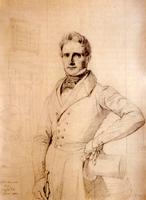
Alexis Rene Le Go
Jean Auguste Dominique Ingres
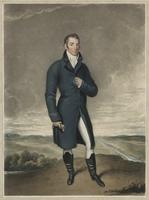
Arthur Wellesley, 1st Duke of Wellington
Charles Turner
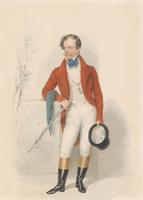
Gentleman in riding costume
Josef Kriehuber
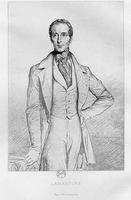
Portrait de Lamartine
Theodore Chasseriau
Admiral Sir Fleetwood Broughton Reynolds Pellew
Jean Auguste Dominique Ingres
General Louis-Etienne Dulong de Rosnay
Jean Auguste Dominique Ingres
Dr. Thomas Church
Jean Auguste Dominique Ingres
Dr. Louis Martinet
Jean Auguste Dominique Ingres
Merry Joseph Blondel
Jean Auguste Dominique Ingres
Ursin Jules Vatinelle
Jean Auguste Dominique Ingres
Portrait of Franz Xaver Winterhalter
Leopold Pollak
John Russel, Sixth Duke of Bedford
Jean Auguste Dominique Ingres
Alexander von Villers
Henri Lehmann
Portrait of Mr. Foureau
Jean Auguste Dominique Ingres
Portrait of a Man, possible Edmé Bochet
Jean Auguste Dominique Ingres
Robert Stewart, 2nd Marquess of Londonderry (Lord Castlereagh)
Charles Turner
General, peer of France, Comte de Morcer in 1838
Paul Gavarni
Armand Bertin
Jean Auguste Dominique Ingres