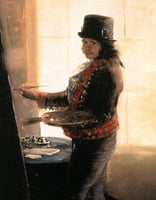
Expertenanalyse zu Francisco Goyas Pretty teacher
Stil: Romanticism · Genre: caricature
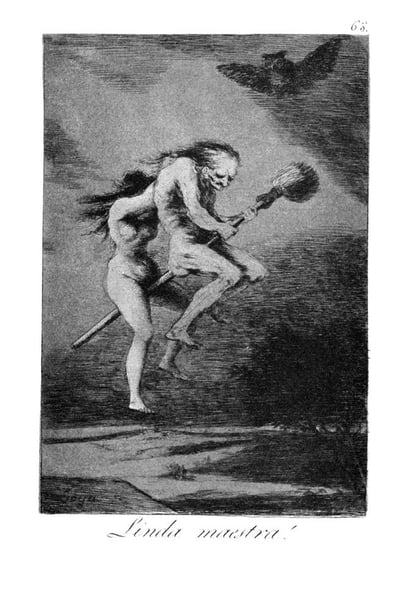
Expert Analysis: “Pretty Teacher” by Francisco Goya
Within the framework of Romanticism, Francisco Goya’s “Pretty Teacher” stands as a trenchant example of the artist’s late-career shift toward biting social satire and psychological depth. Executed as a caricature—a genre that Goya elevated to a vehicle for moral and political critique—the work distills the Romantic fascination with the grotesque, the irrational, and the subjective experience of reality.
Significance within Romanticism and Caricature
Goya’s caricatures, particularly those from his Los Caprichos series (1797–1799) and later Los Disparates (c. 1815–1824), broke decisively from the idealized forms of Neoclassicism. In “Pretty Teacher,” the artist likely deploys exaggerated features and distorted proportions to unmask the hypocrisy or absurdity of institutional authority (here, the figure of a “teacher”). This aligns with Romanticism’s emphasis on individual vision and emotional truth over rational order. The work’s “prettiness” is undercut by a grimace or a sinister expression, embodying the Romantic dualism of beauty and monstrosity—a hallmark of Goya’s mature style.
Goya’s Technique and Meaning
As a caricature, “Pretty Teacher” uses visual hyperbole to comment on the gap between appearance and reality. The teacher’s “pretty” facade likely conceals cruelty, ignorance, or malice—a theme Goya repeatedly explored in his depictions of clergy, nobility, and educators. The loose, energetic line work and stark chiaroscuro (typical of his etchings) enhance the sense of unease, while the composition forces the viewer to confront the absurdity of the figure. This is not mere humor; it is a Romantic indictment of societal failings, rendered with the artist’s characteristic blend of fantasy and brutal candor.
Legacy
By infusing caricature with the psychological intensity of Romanticism, Goya prefigured modern satirical art and the Expressionist impulse. “Pretty Teacher” exemplifies how the genre can transcend simple mockery to become a mirror of human folly—a testament to Goya’s radical vision that art should disturb, enlighten, and challenge.
Museum / Gallery
Visuell ähnlich
20 Werke mit ähnlicher Komposition und Farbpalette
Where is mother going?
Francisco Goya
There it goes
Francisco Goya
Metamorphose
Theophile Steinlen
Trials
Francisco Goya
The Devout Profession
Francisco Goya
Barrators--Giampolo
Gustave Dore
Hercules and Deianira
Agostino Carracci
The Satanic. Removal
Felicien Rops
Adam and Eve
Rembrandt
Study of a Witch
Luis Ricardo Falero
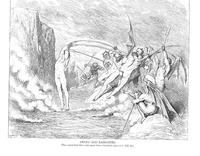
Devils and Barrators
Gustave Dore
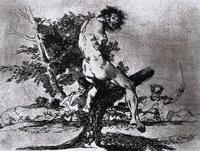
This is worse
Francisco Goya
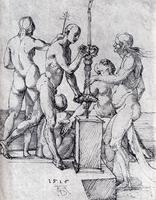
Male And Female Nudes
Albrecht Durer
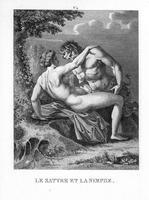
The Satyr and Nymph
Agostino Carracci
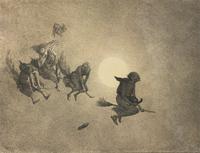
The Witches' Ride by William Holbrook Beard
William Holbrook Beard
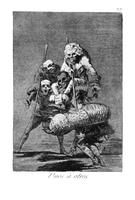
One to anothers
Francisco Goya
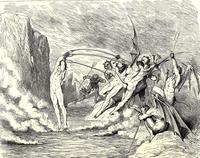
The Inferno, Canto 21
Gustave Dore
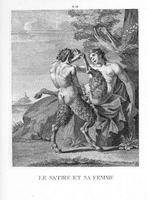
The satire and his wife
Agostino Carracci
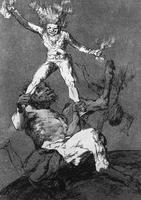
Rise and Fall
Francisco Goya
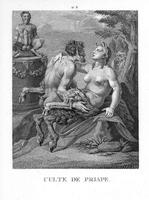
Religion of Priapus
Agostino Carracci