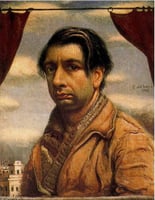
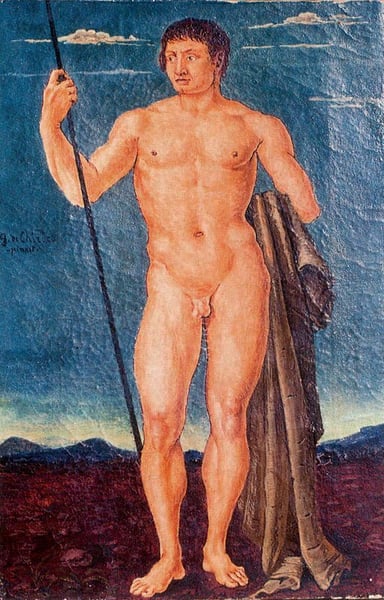
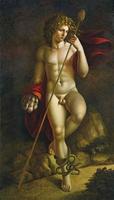
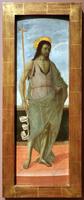
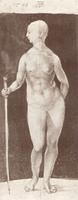
Giorgio de Chirico’s St. George exemplifies his Neo-baroque period, marking a significant departure from his earlier Metaphysical style. While de Chirico is celebrated for his enigmatic, dreamlike cityscapes, this religious painting demonstrates his later turn toward dramatic, theatrical composition and chiaroscuro reminiscent of 17th-century Baroque masters. The work’s significance lies in how it reinterprets Baroque dynamism—typically associated with movement and emotional intensity—through de Chirico’s signature sense of uncanny stillness. The saint’s iconic encounter with the dragon is rendered with a stage-like, almost frozen quality, blending religious iconography with the artist’s enduring fascination with classical tradition and psychological tension. This synthesis of Baroque excess and metaphysical ambiguity makes St. George a key example of de Chirico’s complex engagement with art history, challenging the boundaries between revival and subversion.