Expertenanalyse zu Hans Baldungs Hercules and Antaeus
Stil: Northern Renaissance · Genre: mythological painting
Expert Analysis: Hercules and Antaeus by Hans Baldung (Northern Renaissance)
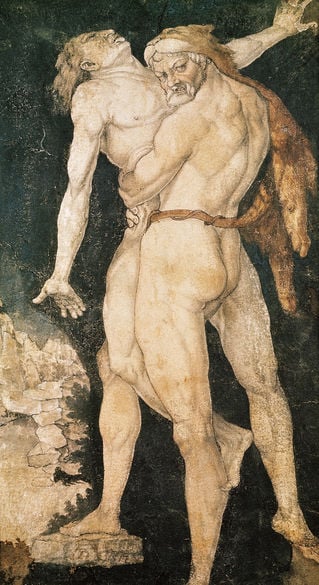
Hans Baldung Grien’s depiction of Hercules and Antaeus stands as a striking example of the Northern Renaissance’s distinctive synthesis of classical myth, naturalistic detail, and psychological tension. Though the subject derives from ancient Greco-Roman lore—Hercules crushing the giant Antaeus, whose strength was renewed by contact with the earth—Baldung transforms the struggle into a visceral, almost contemporary allegory.
Significance within the Northern Renaissance:
Unlike Italian Renaissance treatments, which often emphasized heroic balance and idealized anatomy, Baldung—a German follower of Albrecht Dürer—infuses the scene with a raw, angular energy and a sharp attention to tactile surface detail. The entwined bodies are rendered with a wiry, sinuous precision, their strained muscles and tense postures reflecting a Northern fascination with the physical extremes of conflict. Baldung’s handling of chiaroscuro (strong contrast between light and shadow) heightens the drama, pushing the composition toward a proto-Mannerist instability that foreshadows later 16th-century trends.
Iconographic and Thematic Choices:
Baldung’s version is notable for its explicit emphasis on the moment of separation—Hercules lifts Antaeus off the ground, severing his connection to Mother Earth. This act is not merely narrative but moral: within Northern Renaissance thought, it could symbolize the victory of virtue over vice, or reason over brute instinct. Yet Baldung adds an unsettling erotic undertone, a hallmark of his oeuvre. The twisting, almost grappling intimacy of the figures blurs the line between combat and embrace, inviting a more ambiguous psychological reading. The giant’s face is contorted not just in pain but in a kind of desperate ecstasy, while Hercules’ concentrated expression suggests a cold, efficient cruelty.
Stylistic Innovation:
Baldung’s handling of drapery and anatomy—sharp folds, exaggerated joints, and a metallic sheen to the skin—reflects the Northern Gothic tradition’s love of linear detail, but applied to a classical narrative. The landscape, typically sparse, focuses the eye on the muscular choreography. This work thus exemplifies how Northern artists adapted Italianate themes through a distinctly northern lens: less concerned with ideal beauty than with raw, emotional impact and symbolic complexity.
In sum, Hercules and Antaeus is significant not only for its masterful depiction of physical struggle but for its demonstration of the Northern Renaissance’s unique capacity to merge the classical with the grotesque, the moral with the visceral, and narrative clarity with psychological ambiguity. It remains a key piece in understanding how Germanic artists of the 16th century reimagined antiquity through their own formal and philosophical preoccupations.
Visuell ähnlich
20 Werke mit ähnlicher Komposition und Farbpalette
Hercules and Antaeus
Hans Baldung
Faun with Wounded Foot
Bartholomeus Spranger
Five Bathers
Paul Cezanne
The metamorphosis of Hermaphrodite and Salmacis
Mabuse
An Allegory of Death and Beauty
Hans Baldung
The Fall
Lucas van Leyden
The Silver Age
Lucas Cranach the Elder
Adam And Eve
Albrecht Durer
Adam and Eve
Michelangelo
Adam and Eve
Hans Baldung
Adam and Eve
Mabuse
The Abduction
Paul Cezanne
Adam and Eve
Albrecht Durer
St. George
Giorgio de Chirico
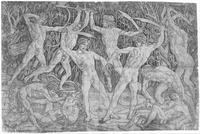
Battle of The Nudes
Antonio del Pollaiolo
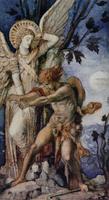
Jacob and the Angel
Gustave Moreau
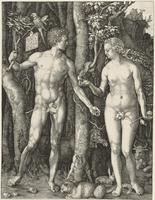
Adam and Eve
Albrecht Durer
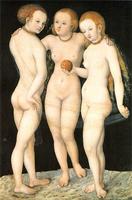
The Three Graces
Lucas Cranach the Elder
Adam and Eve
Lucas Cranach the Elder
Hercules and Anteus
Antonio del Pollaiolo