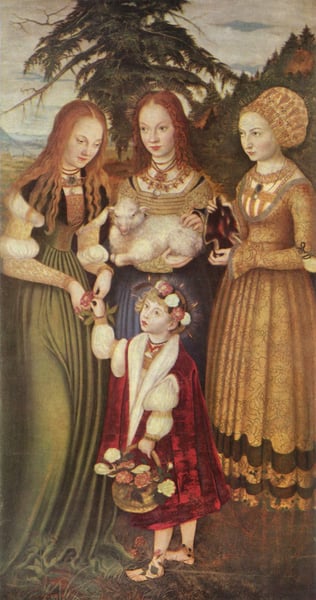
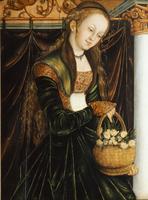
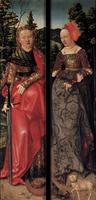
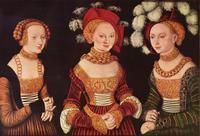
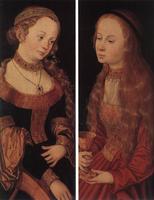
Based solely on the provided structured facts—that the artwork is Saints Dorothea, Agnes and Kunigunde by Lucas Cranach the Elder, executed in the Northern Renaissance style and belonging to the religious painting genre—the work’s significance lies in its embodiment of key Northern Renaissance values within a devotional context. As a religious painting by Cranach, it reflects the period’s emphasis on clear, precise linearity, vibrant local color, and the use of symbolic attributes to identify the figures (e.g., Dorothea’s basket, Agnes’s lamb, Kunigunde’s model church). Within the Northern Renaissance, Cranach’s approach to religious subjects is exemplary for its blend of courtly elegance with spiritual devotionalism, often presenting saints with an idealized, graceful demeanor that makes the sacred accessible to the viewer. This painting thus stands as a representative example of how Northern Renaissance artists combined meticulous detail with religious narrative to create works that are both instructive and aesthetically refined.