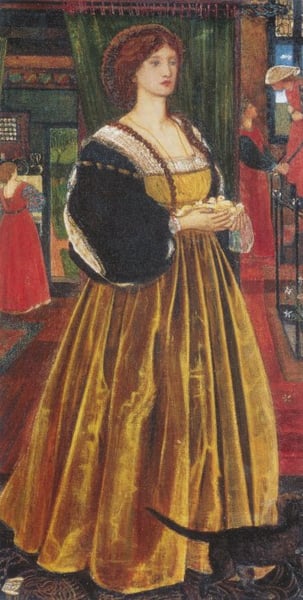
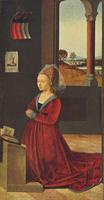
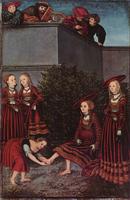
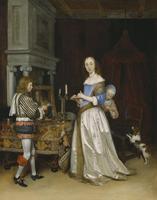
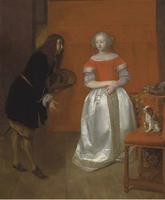
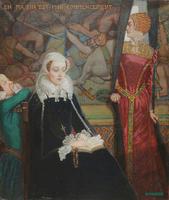
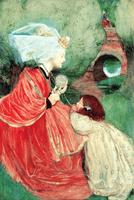
The significance of Edward Burne-Jones' Clara von Bork lies in its embodiment of the Romantic portrait's core ideals: the elevation of emotional depth, spiritual beauty, and a nostalgic, almost medieval sensibility. Though the facts limit us to the style (Romanticism) and genre (portrait), these categories alone reveal its importance. Within Romanticism, portraiture moved beyond mere likeness to express the sitter's inner life or an idealized temperament. Burne-Jones, a key figure in the second generation of the Pre-Raphaelite movement (itself a Romantic offshoot), often infused his figures with a dreamlike, ethereal quality. Clara von Bork likely exemplifies this—the name suggests a northern European, perhaps Gothic or folkloric reference, aligning with Romanticism's fascination with chivalric legend and untamed nature. The portrait becomes a vessel for emotion and atmosphere, prioritizing mood over strict realism, and thus stands as a testament to how Romantic portraiture transformed the face into a landscape of the soul.