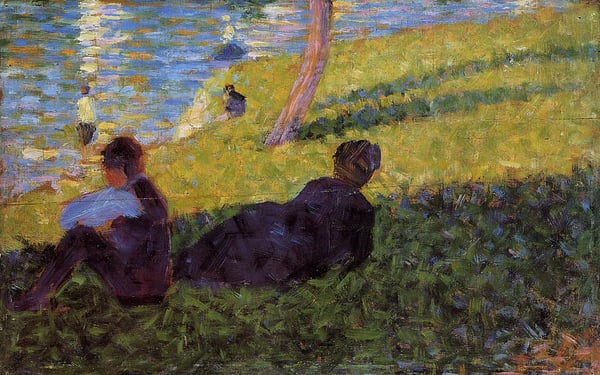
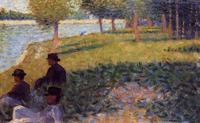
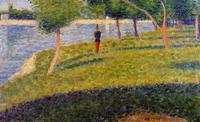
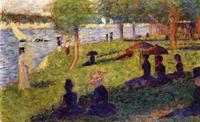
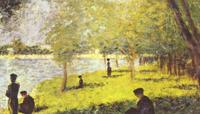
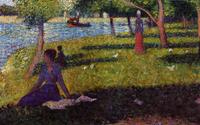
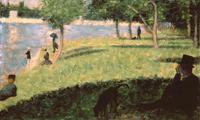
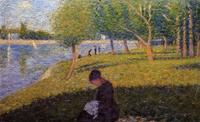
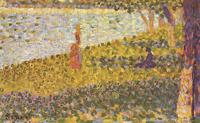
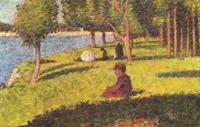
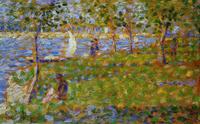
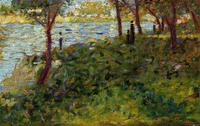
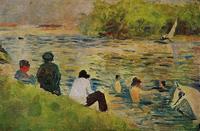
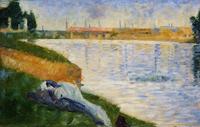
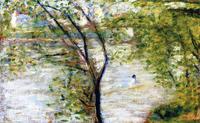
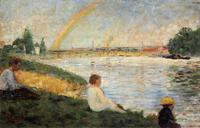
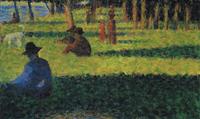
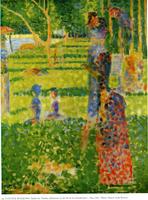
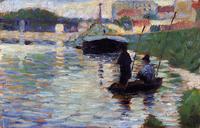
This artwork is a preparatory study for Georges Seurat’s monumental masterpiece, A Sunday on the Island of La Grande Jatte. As a work of Neo-Impressionism, it exemplifies the movement’s revolutionary break with Impressionism through its methodical, scientific approach to color and light. In this study, Seurat is already working out the core compositional structure and the distinctive divisionist technique—applying small, juxtaposed dots of pure pigment that optically blend at a distance. The fact that it is a study highlights Seurat’s painstaking process: he produced numerous oil sketches and drawings to refine the figures, spatial arrangement, and atmospheric effects before executing the final large-scale canvas (1884–1886).
Within Post-Impressionism, this study demonstrates the shift away from spontaneous, transient moments toward a more structured, monumental vision of modern leisure. It captures the same bucolic Parisian riverside scene as the final painting but in a more condensed, sketch-like state, offering insight into the artist’s deliberate planning. The genre—a scene of contemporary life—is elevated by Seurat’s theoretical rigor, making this study significant as both a technical exercise and a crucial step in the creation of an icon of late 19th-century art.