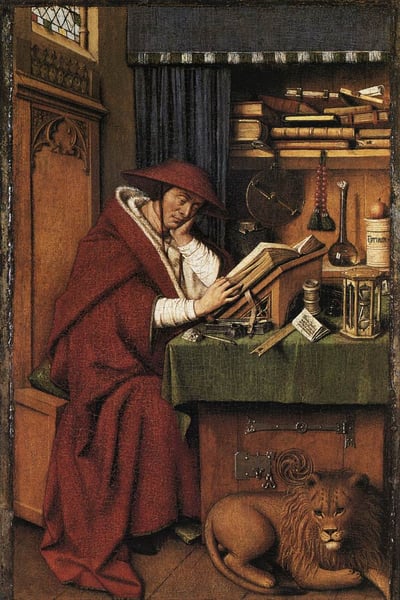
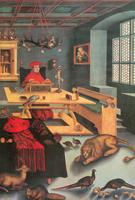
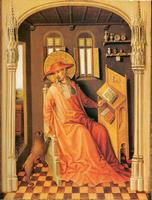
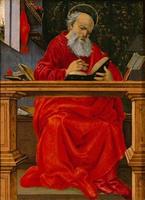
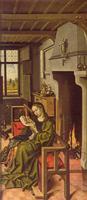
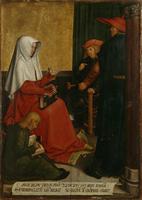
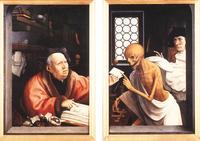
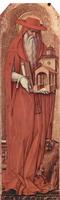
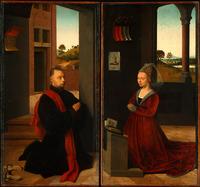
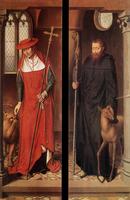
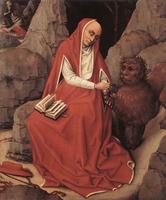
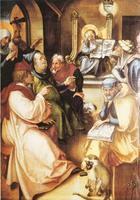
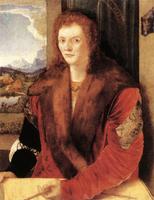
This religious painting by Jan van Eyck is a quintessential example of the Northern Renaissance style. The work’s significance lies in its meticulous realism and symbolic density—hallmarks of van Eyck’s mastery. The intimate, domestic setting of St. Jerome’s study is rendered with extraordinary attention to detail, from the play of light through the window to the textures of cloth, fur, and wood. This emphasis on observed reality, combined with the religious subject matter, elevates a devotional scene into a meditation on scholarship, piety, and the divine order of the natural world. Van Eyck’s technical brilliance in oil painting allows for a luminous, almost jewel-like finish that reinforces the spiritual intensity of the saint’s solitary study. Within the Northern Renaissance, the work exemplifies how religious narratives were brought to life through unprecedented naturalism and layered iconography.