Expertenanalyse zu Bartolome Esteban Murillos Peasant Woman and a Boy
Stil: Baroque · Genre: genre painting
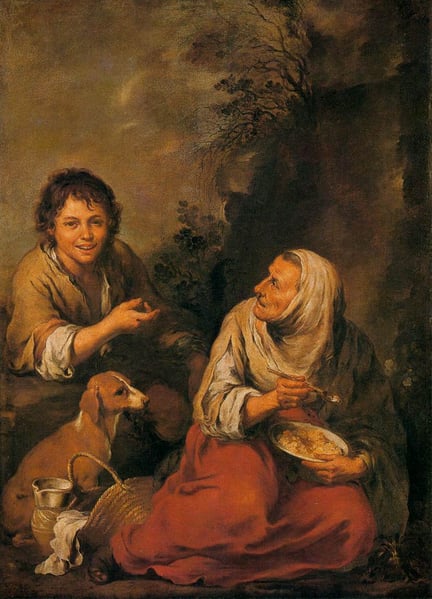
Expert Analysis: "Peasant Woman and a Boy" by Bartolome Esteban Murillo
As a work of Baroque genre painting, Murillo’s Peasant Woman and a Boy exemplifies the period’s shift from purely religious subject matter toward the dignified portrayal of everyday life—a hallmark of the Spanish Golden Age. Murillo was renowned for elevating humble, common figures—particularly poor children and peasants—into subjects of profound human warmth and moral gravity. This painting is significant for its masterful blend of naturalistic observation and idealized tenderness, a balance that distinguishes Murillo within the Baroque tradition.
Stylistic Significance:
Murillo employs a soft, diffused chiaroscuro typical of the late Baroque, using gentle light to model the figures’ faces and hands while leaving the background in muted shadow. This technique focuses attention on the intimate exchange between the peasant woman and the boy, creating a sense of private, unposed grace—a departure from the dramatic theatrics of earlier Baroque artists like Caravaggio. The warm, earthy palette and fluid brushwork evoke a sense of homely realism, yet the composition retains a quiet monumentality: the figures are placed close to the picture plane, inviting the viewer into their world.
Genre Painting Innovation:
Within the genre tradition, Murillo’s oeuvre is notable for humanizing the lower classes without caricature or sentimentality. Here, the peasant woman’s weary but serene expression and the boy’s trusting glance suggest a narrative of shared labor or familial care—common themes in Murillo’s “street urchin” paintings. Unlike cold, strictly representative works, this piece conveys empathy and spiritual dignity, reflecting a Counter-Reformation sensibility that saw saintliness in ordinary human compassion. Murillo’s ability to infuse secular genre scenes with a quiet, almost religious reverence made his works immensely popular and influential, bridging the gap between high Baroque art and the more accessible, anecdotal genre painting that would flourish in the 18th century.
Cultural and Artistic Impact:
This painting encapsulates Murillo’s legacy as the great painter of Seville’s poor—a voice of compassion in an era of rigid social hierarchy. It stands as a testament to the Baroque’s capacity to find the divine in the mundane, and its enduring appeal lies in its ability to make viewers pause over a simple moment of human connection, rendered with extraordinary grace.
Museum / Gallery
Visuell ähnlich
20 Werke mit ähnlicher Komposition und Farbpalette
Two Peasant Boys and a Negro Boy
Bartolome Esteban Murillo
The Little Fruit-Seller
Bartolome Esteban Murillo
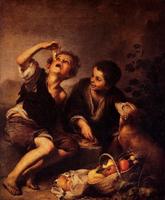
Children Eating a Pie
Bartolome Esteban Murillo
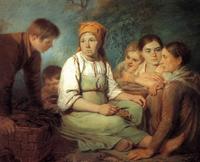
Peeling beets
Alexey Venetsianov
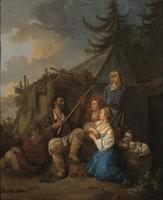
Le Joueur de balalaïka
Jean-Baptiste Le Prince
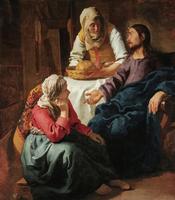
Christ in the House of Martha and Mary
Johannes Vermeer
Young People Laughing
Francisco Goya
Peasant Inn
Adriaen Brouwer
Interior with Card Players
David Rijckaert III
sansone e dalila
Domenico Fiasella
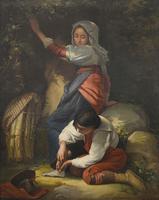
The help of the little shepherd
Giuseppe Mazzolini
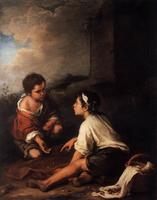
Two boys playing dice
Bartolome Esteban Murillo
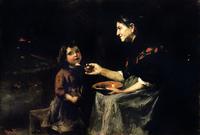
The grandmother
Joan Brull
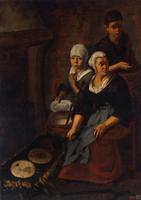
Baking of Flat Cakes
Bartolome Esteban Murillo
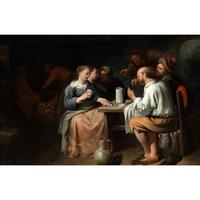
DIE KARTENSPIELER
David Rijckaert III
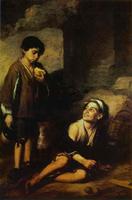
Two Peasant Boys
Bartolome Esteban Murillo
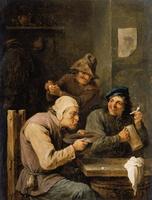
The Hustle Cap
David Teniers the Younger
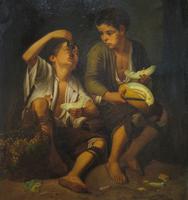
George Henry Hall after Bartolomé Esteban Murillo Boys Eating Grapes and Melon (copy)
George Henry Hall
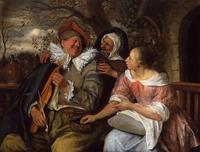
Merry Threesome
Jan Steen
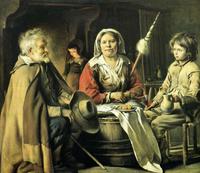
Country interior
Le Nain brothers