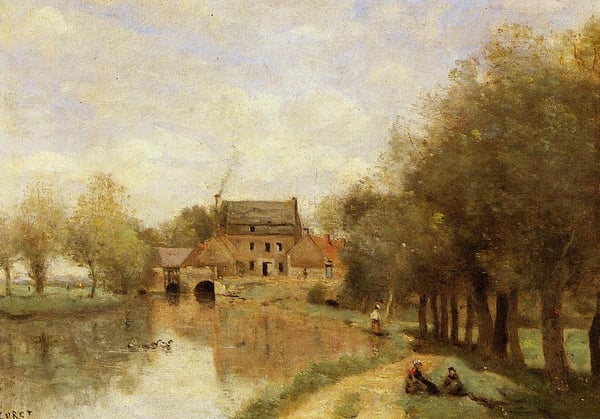
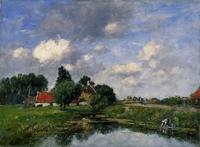
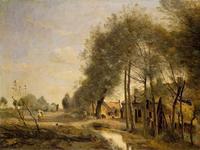
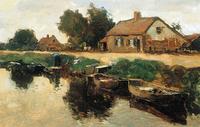
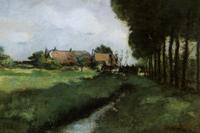
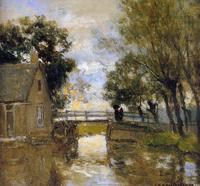
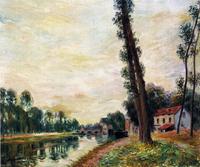
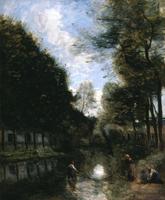
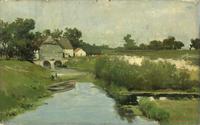
Camille Corot's Arleux du Nord, the Drocourt Mill, on the Sensee (a landscape in the Realist style) is significant for its exemplary embodiment of Realist principles applied to the natural world. Rather than idealizing the scene, Corot focuses on the unembellished, specific character of a rural mill along the Sensee River. The work’s importance lies in its direct, observational approach—a hallmark of Realism—that captures the subtle interplay of light, atmosphere, and the textures of the landscape without theatrical or romanticized exaggeration. By grounding the scene in a named, identifiable location (Arleux du Nord), Corot affirms Realism’s commitment to portraying the ordinary and the local, elevating a humble industrial structure and its surroundings into a subject worthy of serious artistic study. This painting thus marks a pivotal moment where landscape art moves away from classical or picturesque conventions toward a more honest, immediate record of the physical world.