
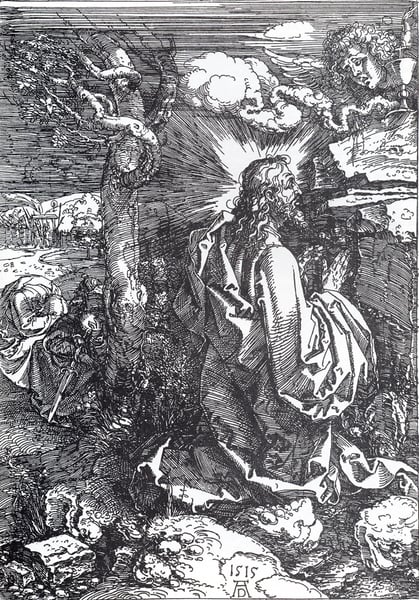
Expertenanalyse zu Albrecht Durers Agony In The Garden
Stil: Northern Renaissance · Genre: religious painting
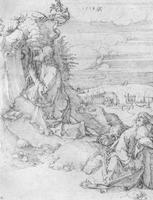
Expert Analysis of "Agony In The Garden" by Albrecht Dürer
As a defining work of the Northern Renaissance, Albrecht Dürer’s Agony In The Garden exemplifies the period’s signature fusion of meticulous naturalism with profound religious symbolism. The painting, a religious painting depicting Christ’s prayer in Gethsemane, is significant for how Dürer translates a deeply emotional biblical moment into the hyper-detailed, almost scientific visual language that distinguishes Northern European art from its Italian contemporaries.
Significance within the Northern Renaissance & Genre:
-
Precision as Devotion: In the Northern Renaissance tradition, physical detail was a vehicle for spiritual truth. Dürer’s treatment of the scene—likely rendered with his characteristic precision in light, texture, and landscape—turns a familiar Gospel episode into a vivid, intimate meditation. The viewer is drawn not into an idealized space, but into a tangible, earthly garden where the divine drama unfolds, reflecting the Northern emphasis on experiencing the sacred through the material world.
-
Psychological Realism: While limited to the factual genre label, Dürer’s handling of the Agony would have focused on Christ’s human vulnerability—a key Northern Renaissance concern. The artist’s known skill in rendering emotion through subtle facial expression and posture anchors the religious narrative in human experience, making the theological concept of sacrifice feel immediate and personal.
-
Synthesis of Observation and Theology: The Northern Renaissance style is marked by its ability to embed symbolic meaning within observed reality. Dürer’s composition likely employs natural elements (rocks, trees, light) as metaphors for Christ’s struggle and divine resolve. This integration of empirical observation with layered iconography—hallmarks of Dürer’s oeuvre—elevates the religious painting from mere illustration to a complex theological statement.
Why It Matters: Agony In The Garden stands as a testament to Dürer’s role in advancing the Northern Renaissance style: it harnesses the era’s passion for detailed naturalism not for its own sake, but to deepen the emotional and spiritual resonance of a core Christian theme. The work’s significance lies in its demonstration of how Northern Renaissance artists used meticulous technique to make the divine feel convincingly present within the mundane world—a characteristic that would profoundly influence later European art.
Museum / Gallery
Visuell ähnlich
20 Werke mit ähnlicher Komposition und Farbpalette
Christ on the mount olive
Albrecht Durer
Christ on the Mount of Olives
Albrecht Durer
Christ on the Mount of Olives
Albrecht Durer
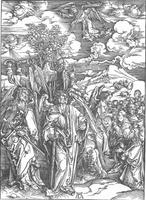
Four Angels Staying the Winds and Signing the Chosen
Albrecht Durer
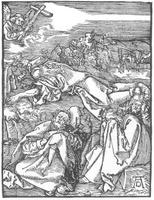
Jesus Christ on the Mount of Olives
Albrecht Durer
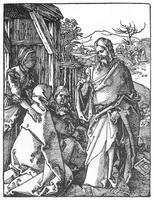
Christ Taking Leave of His Mother
Albrecht Durer
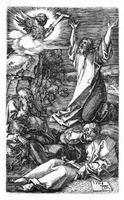
Agony In The Garden
Albrecht Durer
Illustration for the Poem "The Three Statues of Aegina"
Frederick Sandys
Christ on the Mount of Olives
Albrecht Durer
The Coronation of the Virgin
Albrecht Durer
The Ascension
Albrecht Durer
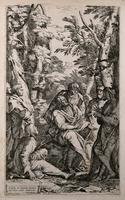
a Gathering of Students, Amon
Salvator Rosa
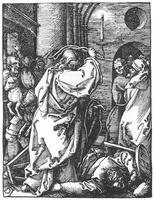
Christ Driving the Merchants from the Temple
Albrecht Durer
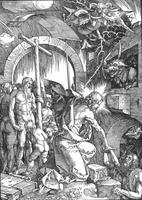
The Harrowing of Hell or Christ in Limbo, from The Large Passion
Albrecht Durer
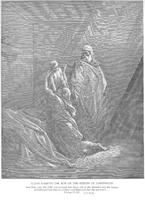
Elijah Raises the Son of the Widow of Zarephath
Gustave Dore
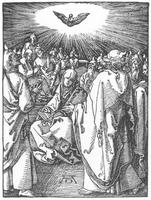
The Descent of the Holy Spirit
Albrecht Durer
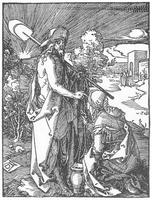
Christ Appears to Mary Magdalene
Albrecht Durer
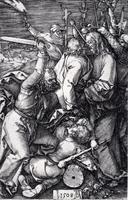
Betrayal Of Christ
Albrecht Durer
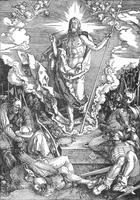
Resurrection
Albrecht Durer
Christ on the Mount of Olives
Albrecht Durer