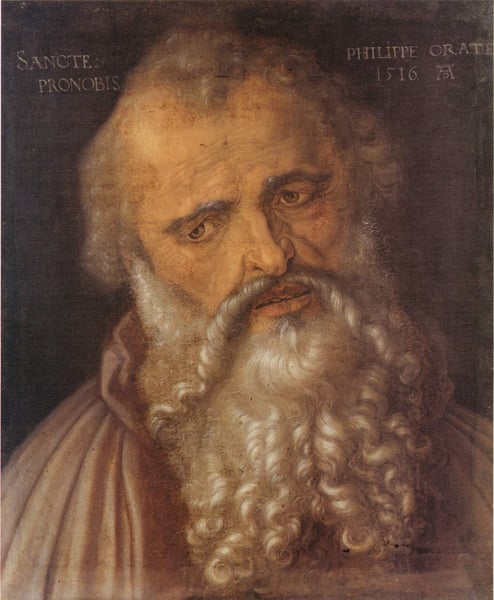
The significance of Albrecht Dürer’s Apostle Philip lies in its embodiment of the Northern Renaissance’s core achievements: meticulous naturalism fused with profound religious symbolism. As a religious painting, it captures the apostle in a moment of introspective piety, reflecting the period’s shift toward individualized, psychologically resonant depictions of holy figures. Dürer’s Northern Renaissance style emphasizes precise detail, textured drapery, and a luminous, almost tactile realism—qualities that elevate this work beyond mere iconography into a study of human character and divine presence. The piece stands as a testament to how Northern artists like Dürer synthesized the era’s spiritual themes with an unprecedented commitment to observable reality, making Apostle Philip a key example of the region’s contribution to religious art.