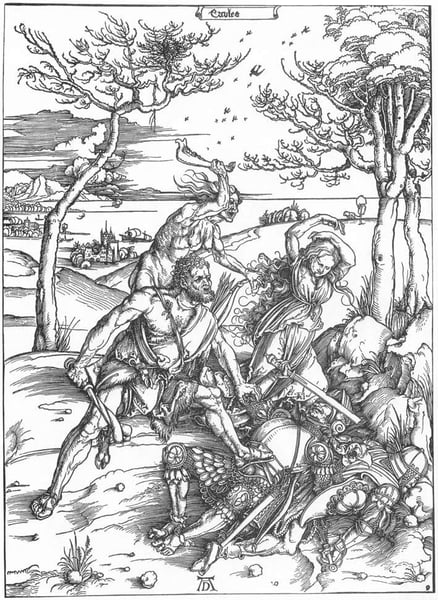
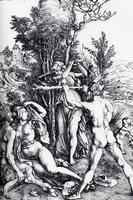
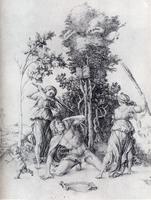
Albrecht Dürer’s Hercules Killing the Molionides stands as a pivotal example of the Northern Renaissance’s engagement with classical mythology. Executed with the meticulous detail characteristic of Northern European art, the work bridges the region’s tradition of precise naturalism with the humanist revival of ancient narratives. Dürer’s treatment of the mythological subject—rare in Northern art at the time—demonstrates how the Northern Renaissance adapted Italianate themes while retaining its own visual language of intense realism, expressive figures, and symbolic complexity. This painting is significant for its fusion of heroic idealization with the gritty, tangible physicality that would define Dürer’s influence on later European art.