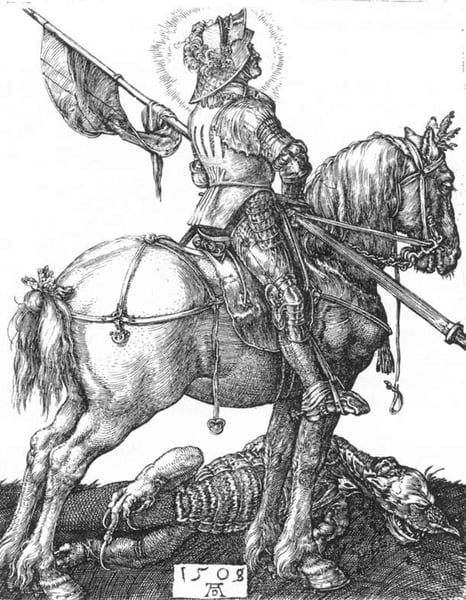
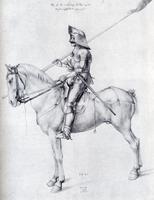
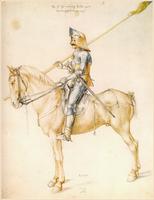
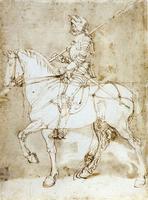
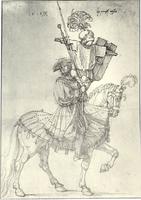
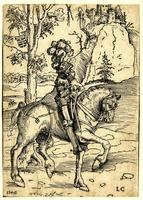
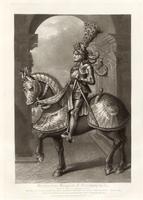
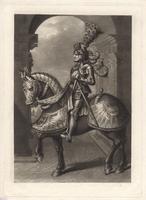
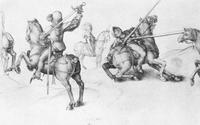
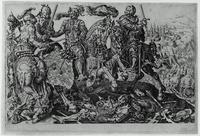
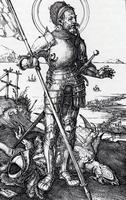
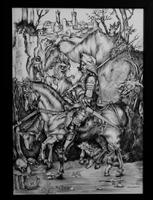
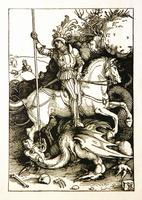
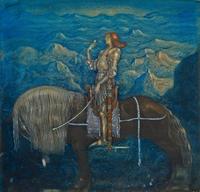
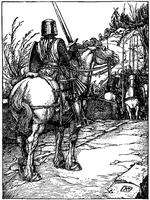
Albrecht Dürer’s St George on Horseback is a masterful example of the Northern Renaissance’s fusion of meticulous naturalism with deep religious symbolism. As a religious painting (and often replicated as a renowned engraving), it portrays the dragon-slaying saint as an armored Christian knight, a popular allegory of faith triumphing over evil. What makes this work significant within its style and period is Dürer’s ability to imbue a traditional devotional subject with the Northern Renaissance hallmarks of exquisite detail, precise linework, and a vivid sense of texture—from the shimmering scales of the dragon to the elaborate armor and flowing mane of the horse. The composition balances dynamic action with composed clarity, reflecting Dürer’s study of Italian Renaissance proportions while retaining the Gothic emphasis on intricate surface realism. This piece stands as a testament to Dürer’s genius in elevating printmaking and painting to a level of intellectual and technical sophistication that defined Northern Renaissance art, merging spiritual narrative with an almost scientific observation of the natural world.