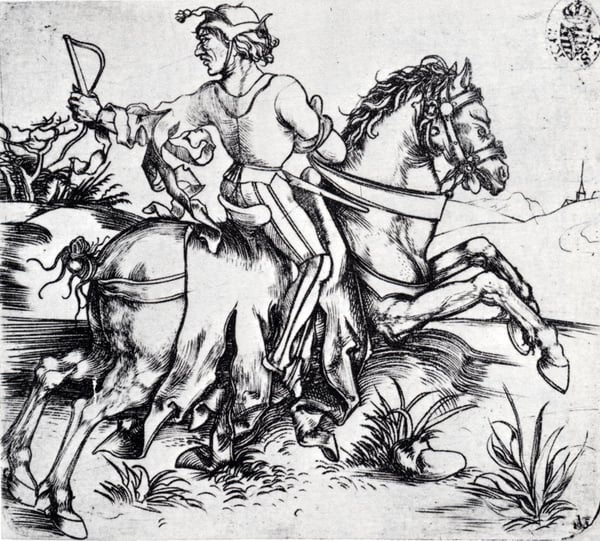
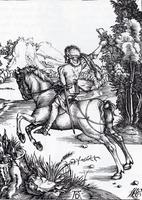
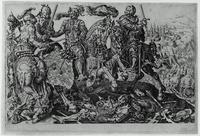
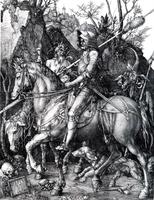
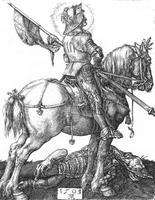
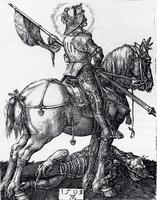
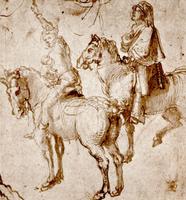
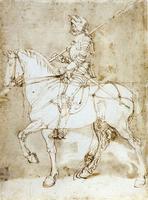
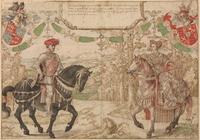
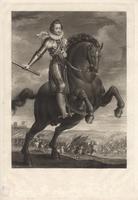
Based solely on the provided structured facts, the significance of Albrecht Dürer’s The Great Courier within the Northern Renaissance lies in its marriage of meticulous naturalism with everyday subject matter. As a genre painting—a type of scene depicting common life rather than religious or mythological narrative—the work exemplifies the period’s growing interest in observing and dignifying ordinary human activity. Dürer’s detailed rendering of the courier figure, typical of Northern Renaissance precision, elevates a humble, transient moment into a subject worthy of artistic attention. This focus on realism and daily experience marks a key shift from medieval symbolism toward the human-centered observation that defines the era.