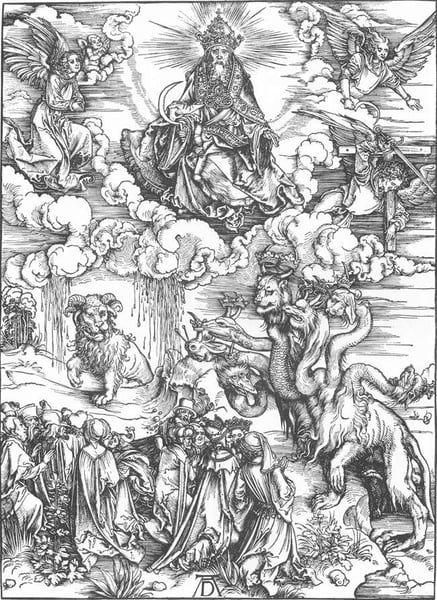
The Sea Monster and the Beast with the Lamb s Horn
Ayrıntılar
Albrecht Durer sanatçısının The Sea Monster and the Beast with the Lamb s Horn eseri hakkında uzman analizi
Tarz: Northern Renaissance · Tür: religious painting
Expert Analysis: "The Sea Monster and the Beast with the Lamb's Horn" by Albrecht Dürer
Albrecht Dürer’s The Sea Monster and the Beast with the Lamb's Horn is a masterful example of Northern Renaissance religious painting, drawing its apocalyptic imagery from Revelation 13. The work depicts the beast rising from the sea (often interpreted as a symbol of worldly political power) alongside the second beast—the false prophet—who, despite having “horns like a lamb,” speaks like a dragon, representing deceptive heresy. Dürer’s rendering captures the moment when the second beast compels the earth and its inhabitants to worship the first beast, a scene charged with theological dread and moral urgency.
Significance within the Northern Renaissance Style and Period:
Dürer’s treatment elevates this work beyond mere illustration into a profound synthesis of Northern European precision and Italian Renaissance compositional structure. The intricate linework and meticulous attention to naturalistic detail—visible in the scales of the sea monster, the texture of the lamb’s horns, and the individualized expressions of the human figures—exemplify the Northern Renaissance’s characteristic realism and symbolic density. At the same time, Dürer employs a dynamic, balanced arrangement that echoes contemporary Italian developments in perspective and anatomy, demonstrating his pivotal role as a bridge between northern and southern artistic traditions.
The artwork is particularly significant as part of Dürer’s groundbreaking Apocalypse series (1498), the first book in history conceived, designed, and published entirely by a single artist. This fusion of word and image, printed using the then-modern technique of woodcut, allowed for wide dissemination and reflected the period’s growing interest in lay access to biblical narrative. Dürer’s interpretation of Revelation—with its monstrous, psychologically charged figures—not only underscores the Northern Renaissance’s fascination with the grotesque and the sublime but also serves as a vehicle for Reformation-era anxieties about false prophets and worldly corruption. In its technical brilliance and layered symbolism, this work stands as a landmark of early printmaking and a quintessential expression of Northern Renaissance religious and artistic innovation.
Museum / Gallery
Görsel olarak benzer
İlişkili kompozisyon ve renk paletine sahip 20 eser
The Opening of the Fifth and Sixth Seals
Albrecht Durer
The Seven Trumpets Are Given to the Angels
Albrecht Durer
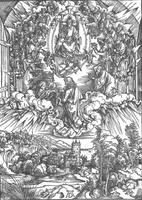
St John and the Twenty four Elders in Heaven
Albrecht Durer
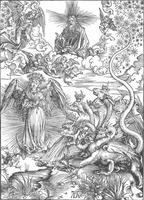
The woman clothed with the sun and the seven headed dragon
Albrecht Durer
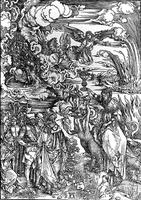
The Whore of Baylon
Albrecht Durer
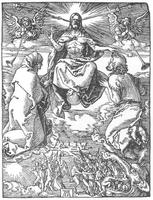
The Last Judgment
Albrecht Durer
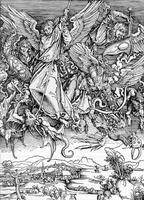
St Michael Fighting the Dragon
Albrecht Durer
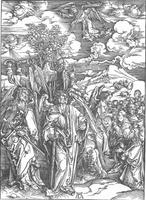
Four Angels Staying the Winds and Signing the Chosen
Albrecht Durer
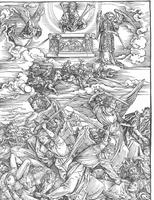
The Battle of the Angels
Albrecht Durer
Doomsday
Albrecht Durer
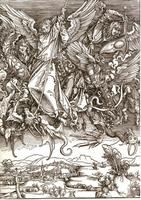
St. Michael and the Dragon, from a Latin edition
Albrecht Durer
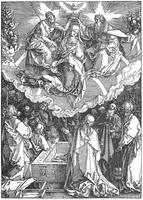
The Coronation of the Virgin
Albrecht Durer
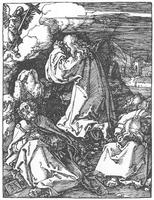
Christ on the Mount of Olives
Albrecht Durer
Christ on the mount olive
Albrecht Durer
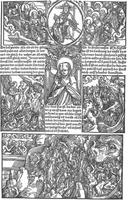
Illustration to Revelationes Sancte Birgitte
Albrecht Durer
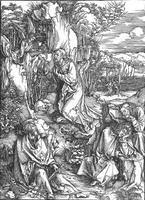
Christ on the Mount of Olives
Albrecht Durer
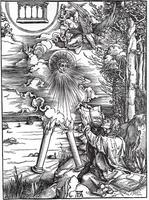
St. John Devouring the Book from the 'Apocalypse'
Albrecht Durer
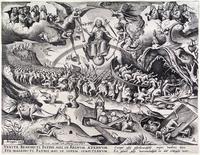
Last Judgment
Pieter Bruegel the Elder
The Temptation of St. Anthony
Martin Schongauer
Jesus Christ on the Mount of Olives
Albrecht Durer