Expertenanalyse zu Albrecht Durers The Conversion Of St. Paul
Stil: Northern Renaissance · Genre: religious painting
Expert Analysis: "The Conversion of St. Paul" by Albrecht Dürer
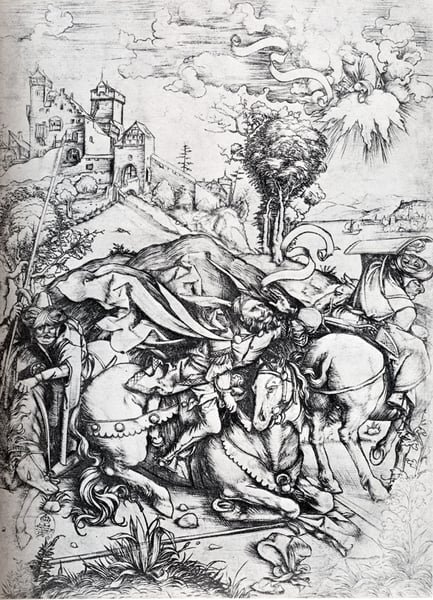
As a masterwork of the Northern Renaissance, Albrecht Dürer’s The Conversion of St. Paul exemplifies the period’s hallmark fusion of meticulous naturalism with profound spiritual intensity. Within the genre of religious painting, Dürer elevates the biblical narrative—Saul’s dramatic transformation on the road to Damascus—into a scene of psychological and divine turmoil that resonates deeply with Northern European sensibilities.
Significance within the Northern Renaissance:
-
Detailed Realism and Symbolic Precision: True to Northern Renaissance traditions, Dürer renders the landscape, armor, and figures with extraordinary precision. Every leaf, fold of cloth, and glint of light on metal serves not only to convince the eye but to underscore the physical reality of the moment—a hallmark of Northern artists who saw the natural world as a vessel for spiritual truth.
-
Emotional and Dramatic Intensity: Unlike the serene, idealized conversions often found in Italian Renaissance works, Dürer’s composition bursts with chaotic energy. Paul is thrown from his horse, his body twisted in a sudden, violent revelation. The horse’s rearing motion and the startled reactions of his companions amplify the shock of divine intervention. This focus on human vulnerability and emotional immediacy is a defining characteristic of Northern Renaissance religious painting.
-
Integration of Italian Renaissance Elements: Dürer, uniquely among northern artists, traveled to Italy and absorbed classical ideas of proportion, perspective, and balanced composition. In this work, he merges those principles with Northern attention to texture and light. The dramatic chiaroscuro—strong contrasts of light and shadow—not only heightens the scene’s mystery but also recalls Leonardo’s sfumato, while the solid, volumetric figures show an understanding of human anatomy that elevates the work beyond traditional Gothic stylization.
-
Printmaking Mastery (If Engraving or Woodcut): While the exact medium is not specified, Dürer was celebrated for his engravings and woodcuts. His ability to convey such a complex, multi-figure composition with fine lines and cross-hatching—achieving both depth and texture—was revolutionary. The Conversion of St. Paul likely demonstrates his virtuoso control of line to suggest atmosphere, emotion, and narrative, making religious imagery accessible to a broader audience through print.
-
Theological Depth: The conversion moment is not merely an action scene; it is a study of the inner soul’s encounter with the divine. Dürer’s Paul is blinded not only by the heavenly light but by the overwhelming grace of God—a theme that resonated with Northern humanist concerns about personal faith and redemption. The work thus functions as a devotional image, inviting contemplation of one’s own spiritual transformation.
In sum, The Conversion of St. Paul stands as a pivotal Northern Renaissance religious painting that marries the region’s love for tangible detail with a dynamic, emotionally charged narrative. Dürer’s achievement lies in his ability to make a miraculous event feel both intimately human and sublimely divine, securing his legacy as the preeminent artist of the Northern Renaissance.
Museum / Gallery
Visuell ähnlich
20 Werke mit ähnlicher Komposition und Farbpalette
The Knight and the Landsknecht
Albrecht Durer
The Four Horsemen of the Apocalypse, Death, Famine, Pestilence and War
Albrecht Durer
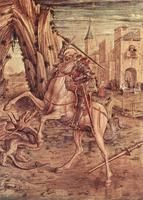
Saint George and the dragon
Carlo Crivelli
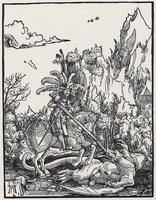
The St. George killing the dragon art
Albrecht Altdorfer
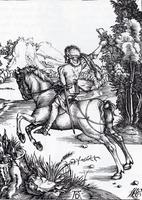
The Small Courier
Albrecht Durer
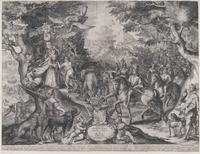
Allegory of the Flourishing State of the United Provinces
Jan Saenredam
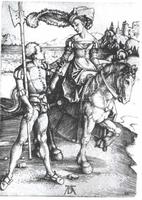
Noble woman at horses and Lansquenet
Albrecht Durer
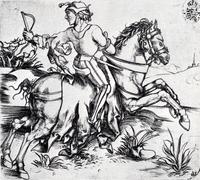
The Great Courier
Albrecht Durer
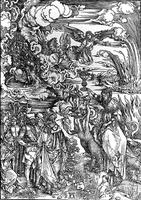
The Whore of Baylon
Albrecht Durer
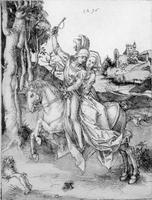
Couple on Horseback
Albrecht Durer
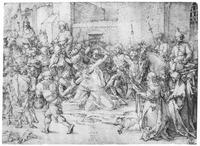
The Cross of Christ with Saint Veronica
Albrecht Durer
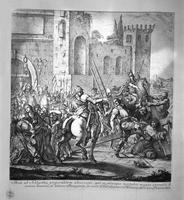
Jesus carried to Calvary
Giovanni Battista Piranesi
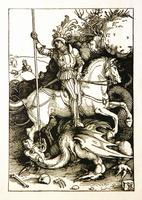
St. George and the Dragon
Albrecht Durer
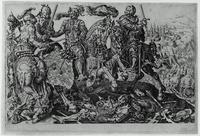
Conquest of Tunis (Victory of Charles V)
Maerten van Heemskerck
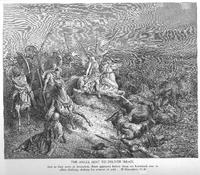
The Angel Is Sent to Deliver Israel
Gustave Dore
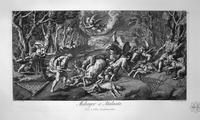
The Sibyls in the Church of St. Our Lady of Peace
Giovanni Battista Piranesi
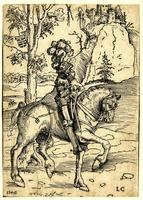
Knight in Armor Riding toward the Right
Lucas Cranach the Elder
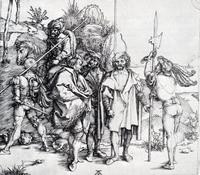
Five Lansquenets And An Oriental On Horseback
Albrecht Durer
Christ Bearing the Cross
Albrecht Durer
A cavalry fight
Rembrandt