
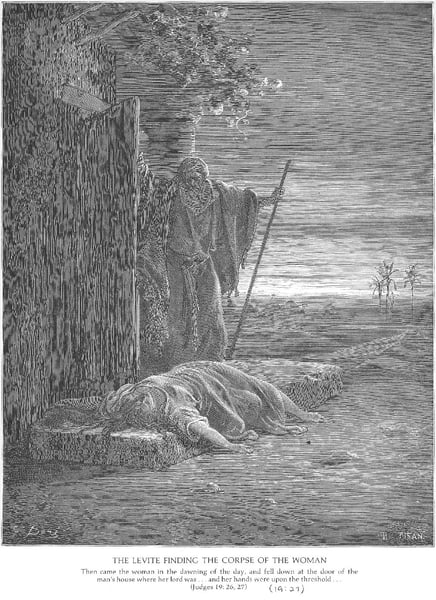
Analisi esperta di A Levite Finds a Woman's Corpse di Gustave Dore
Stile: Romanticism · Genere: religious painting
Expert Analysis: "A Levite Finds a Woman's Corpse" by Gustave Doré
This work is a striking example of Romanticism applied to religious painting, and its significance lies in how Doré transforms a biblical narrative into a visceral, emotionally charged scene that epitomizes the Romantic fascination with the sublime, the macabre, and the human condition.
Context and Subject
The painting illustrates the grim episode from the Book of Judges (19:27-28), in which a Levite discovers the body of his concubine after she has been abused and left for dead. Doré, known primarily for his book illustrations (e.g., Dante’s Inferno, the Bible), here brings the same theatrical intensity to a canvas. The subject—a moment of horror, grief, and moral outrage—is perfectly suited to Romanticism’s taste for extreme emotion and dramatic moral contrasts.
Romantic Sensibility
- Dramatic Chiaroscuro: Doré uses deep shadows and stark highlights, typical of Romanticism, to focus attention on the corpse’s pale form and the Levite’s anguished posture. The contrast between light and dark heightens the sense of shock and despair.
- Emotional Authenticity: The Levite’s gesture—perhaps a raised hand or a bowed head—conveys raw grief and revulsion. Romanticism prized the expression of unfiltered feeling over classical restraint, and Doré delivers this through the figure’s tense, unstable pose.
- Mood and Atmosphere: The setting is vague yet ominous—a rocky, desolate landscape or a darkened interior—evoking the Romantic idea of nature as indifferent or hostile to human suffering. The corpse’s limp, exposed state forces the viewer to confront mortality directly.
Significance within the Style and Genre
- In religious painting, Romanticism often broke from the serene, idealized depictions of earlier eras. Doré’s work does not show a holy moment of revelation or salvation; instead, it dwells on the darkest consequences of sin and violence. This makes it a radical, human-centered reinterpretation of biblical text, aligning with Romanticism’s focus on individualism and the flawed, suffering human.
- Doré’s composition is cinematic avant la lettre—a single, frozen instant of maximum tension. This aligns with Romanticism’s love of the “pregnant moment,” where the entire narrative converges on a point of profound emotional or moral weight.
Legacy
“A Levite Finds a Woman’s Corpse” exemplifies how Romantic religious painting could challenge biblical orthodoxy by emphasizing psychological drama over didactic piety. Doré’s mastery of chiaroscuro and his unflinching depiction of trauma resonate with later Symbolist and Expressionist works, making this a crucial bridge between 19th-century Romanticism and modern art’s preoccupation with the dark side of human experience.
Visivamente simili
20 opere con composizione e palette affini
Samuel Blesses Saul
Gustave Dore
Rizpah's Kindness toward the Dead
Gustave Dore
The Prophet Ezekiel
Gustave Dore
The Angel Raphael and the Family of Tobit
Gustave Dore
The Prophet Amos
Gustave Dore

The Large Shepherdess
Jean-Francois Millet
The Ark Is Returned to Beth shemesh
Gustave Dore
Jehu's Companions Find Jezebel's Remains
Gustave Dore
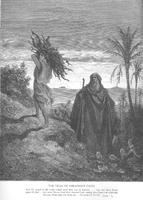
The Testing of Abraham's Faith
Gustave Dore
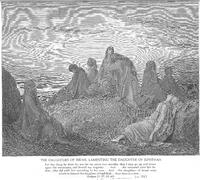
Israelite Women Mourn with Jephthah's Daughter
Gustave Dore
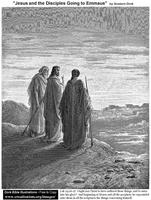
Jesus And The Disciples Going To Emmaus
Gustave Dore
Abraham, God and Two Angels
Gustave Dore
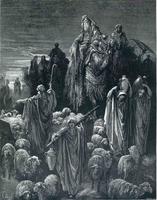
Jacob Goeth Into Egypt
Gustave Dore
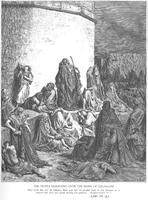
The People Mourning over the Ruins of Jerusalem, Lamentations 1:1-2
Gustave Dore
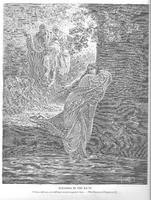
Susanna in the Bath
Gustave Dore

The Prodigal Son In The Arms Of His Father
Gustave Dore
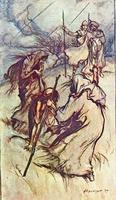
They were stopped by the Strange Appearance of Three Figures
Arthur Rackham
The Gleaners
Gustave Dore
The Return Of The Prodigal Son
Gustave Dore
The Suicides
Gustave Dore