
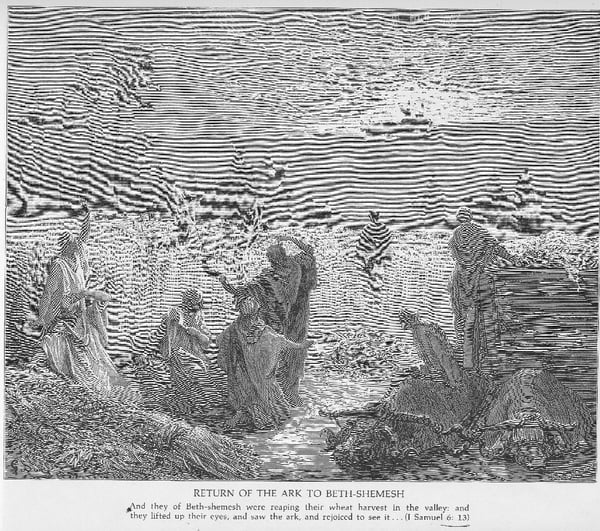
Expertenanalyse zu Gustave Dores The Ark Is Returned to Beth shemesh
Stil: Romanticism · Genre: religious painting
Expert Analysis of "The Ark Is Returned to Beth Shemesh" by Gustave Doré
Gustave Doré’s The Ark Is Returned to Beth Shemesh (c. 1866) stands as a masterful example of Romantic religious painting, showcasing the artist’s unparalleled ability to infuse a biblical narrative with dramatic intensity and emotional grandeur. Created during the height of his career—when Doré was celebrated for his illustrations of literary and religious texts—this work is significant for its fusion of meticulous historical detail with the Romantic sublime, transforming a pivotal Old Testament event into a scene of collective awe and divine presence.
Romanticism and the Sublime in Religious Narrative
As a Romantic work, the painting prioritizes emotional impact over mere documentation. Doré harnesses chiaroscuro—deep shadows contrasting with bursts of light—to direct the viewer’s gaze toward the Ark of the Covenant, which occupies the compositional focal point. The Ark itself is rendered not as a static object but as a blazing source of radiance, symbolizing the glory of God returning to His people. This use of light echoes the Romantic fascination with the ineffable, making the divine palpable through painterly effect. The crowd of Israelites, depicted in varied postures of reverence, shock, and celebration, amplifies the psychological drama: their faces and gestures convey the collective relief and fear of a community witnessing a miracle.
Significance within Doré’s Oeuvre and 19th-Century Art
Doré, primarily known for his wood-engraved illustrations for The Bible (1866) and works of Dante, Milton, and Cervantes, brought the same graphic precision and theatricality to his oil paintings. The Ark Is Returned to Beth Shemesh is particularly significant as it demonstrates his ability to translate the stark lines of engraving into a rich, painterly vocabulary while retaining the narrative clarity that made him a household name. The composition is densely populated but never chaotic; each figure serves a role—some lifting their arms in triumph, others kneeling in penitence—creating a rhythm that guides the eye from the foreground to the distant hills of Beth Shemesh. This deliberate arrangement reflects Doré’s understanding of the biblical source (1 Samuel 6), where the return of the Ark is both a joyous homecoming and a sobering reminder of divine power.
Key Elements of Its Enduring Impact
- Historical and Religious Authenticity: Doré researched Levantine costume, architecture, and geography, grounding the miraculous in a believable ancient setting without sacrificing Romantic idealism. The oxen drawing the cart, for example, are rendered with naturalistic vigor, anchoring the celestial event in the physical world.
- Dramatic Contrasts: The clash of light and dark, the turbulent sky, and the almost theatrical gestures of the figures evoke the Romantic preference for the sublime—awe mixed with terror. The painting invites the viewer to experience not just a story but a spiritual revelation.
- Influence on Popular Religious Imagery: Doré’s biblical illustrations, including this scene, became iconic in the 19th and 20th centuries, shaping Western visual conceptions of scripture. The painting’s combination of epic scale, emotional realism, and divine luminescence directly anticipates later cinematic and narrative art.
In sum, The Ark Is Returned to Beth Shemesh exemplifies Romantic religious painting at its zenith: it is a work where faith, history, and artistry collide, offering a window into the 19th-century imagination that sought to make the sacred vivid and unforgettable.
Visuell ähnlich
20 Werke mit ähnlicher Komposition und Farbpalette
The Angel Raphael and the Family of Tobit
Gustave Dore
The Apostles Preaching The Gospel
Gustave Dore
Israelite Women Mourn with Jephthah's Daughter
Gustave Dore
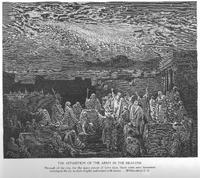
The Army Appears in the Heavens
Gustave Dore
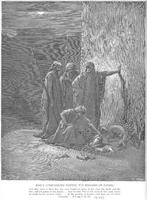
Jehu's Companions Find Jezebel's Remains
Gustave Dore
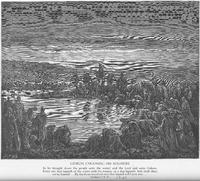
Gideon Chooses 300 Soldiers
Gustave Dore
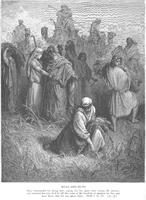
Ruth and Boaz
Gustave Dore
The Prophet Ezekiel
Gustave Dore
The People Mourning over the Ruins of Jerusalem, Lamentations 1:1-2
Gustave Dore
The Ascension
Gustave Dore
Susanna in the Bath
Gustave Dore
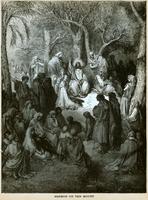
Sermon on the Mount
Gustave Dore
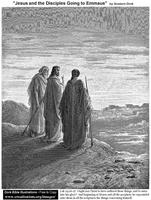
Jesus And The Disciples Going To Emmaus
Gustave Dore
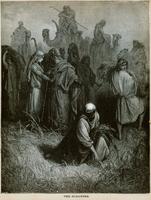
The Gleaners
Gustave Dore
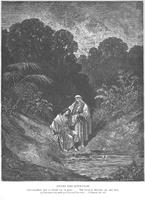
David and Jonathan
Gustave Dore
The Plague of Jerusalem
Gustave Dore
The Suicides
Gustave Dore
The Benjaminites Take the Virgins of Jabesh gilead
Gustave Dore
Sordello and Virgil
Gustave Dore
The Dell
Gustave Dore