
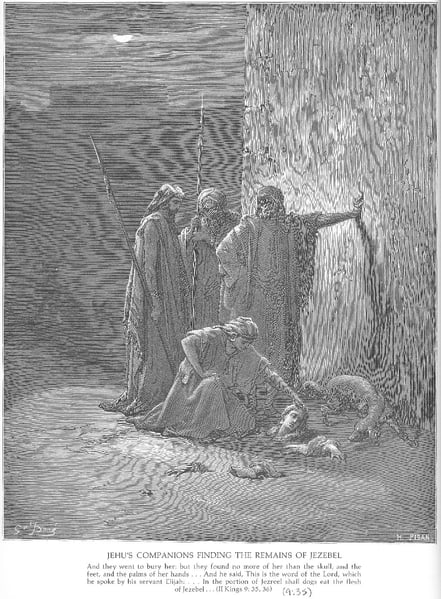
Expertenanalyse zu Gustave Dores Jehu's Companions Find Jezebel's Remains
Stil: Romanticism · Genre: religious painting
Gustave Doré’s Jehu’s Companions Find Jezebel’s Remains exemplifies the Romantic preoccupation with the sublime, the macabre, and the dramatic intensity of biblical narrative. Executed in oil (though Doré is best known for his engravings), the painting draws from the Old Testament account in 2 Kings, where the prophet Jehu’s servants discover the ravaged corpse of the queen Jezebel—her body devoured by dogs, leaving only her skull, feet, and palms.
As a Romantic religious work, Doré leverages chiaroscuro and a theatrical composition to heighten emotional and spiritual terror. The scene is set in a desolate, shadowy landscape; the remains lie in the foreground, bathed in a cold, pitiless light that starkly contrasts with the deep darkness surrounding them. Jehu’s companions recoil or peer with grim fascination, their gestures and expressions capturing a range of horror, awe, and divine retribution. The Romantic notion of the sublime—where beauty and terror intertwine—is fully realized in the gruesome yet reverent depiction of a fallen queen’s end.
Doré’s significance here lies in his ability to transform a violent, gory passage into a solemn meditation on power, pride, and divine justice. Unlike neoclassical restraint, Romanticism embraced the raw, the ugly, and the awesome; Doré’s painting pushes this boundary, forcing the viewer to confront mortality and the finality of God’s judgment. The work stands as a powerful example of Romantic religious art, where faith is not serene but catastrophic, and where the remains of a tyrant become a sublime symbol of moral order.
Visuell ähnlich
20 Werke mit ähnlicher Komposition und Farbpalette
Christ Feeding The Multitude
Gustave Dore
The Prodigal Son In The Arms Of His Father
Gustave Dore
The Ark Is Returned to Beth shemesh
Gustave Dore
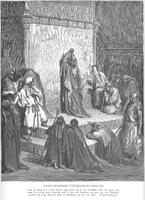
David Mourns the Death of Absalom
Gustave Dore
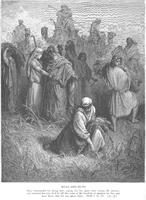
Ruth and Boaz
Gustave Dore
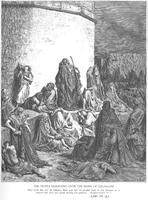
The People Mourning over the Ruins of Jerusalem, Lamentations 1:1-2
Gustave Dore
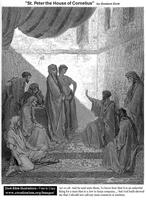
St.Peter In The House Of Cornelius
Gustave Dore
Jacob and Esau Meet
Gustave Dore
The Angel Raphael and the Family of Tobit
Gustave Dore
Sermon on the Mount
Gustave Dore
Christ And The Tribute Money
Gustave Dore
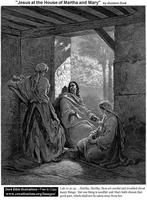
Jesus At The House Of Martha And Mary
Gustave Dore
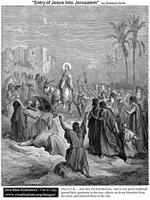
Entry Of Jesus Into Jerusalem
Gustave Dore
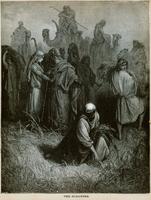
The Gleaners
Gustave Dore
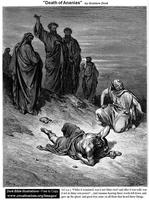
Death Of Ananias
Gustave Dore
The Gluttons--Forese
Gustave Dore
Jael Kills Sisera
Gustave Dore
The Army Appears in the Heavens
Gustave Dore
The Apostles Preaching The Gospel
Gustave Dore
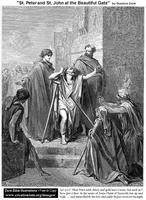
St. Peter And St John At Beautiful Gate
Gustave Dore