
Expertenanalyse zu Gustave Dores Don Quixote
Stil: Romanticism · Genre: illustration
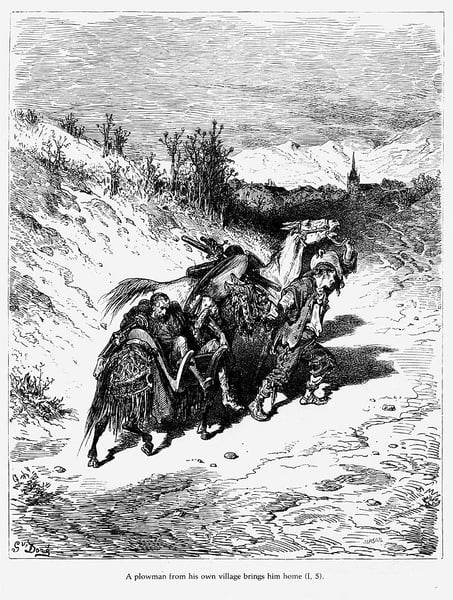
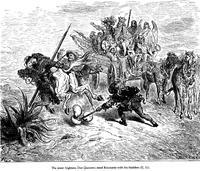
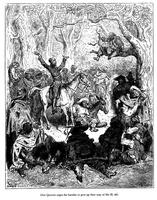
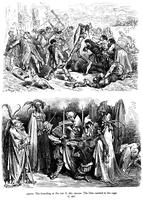
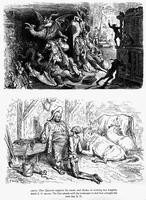
This work is a quintessential example of how Romanticism elevated illustration from mere decoration to a powerful narrative art form. Gustave Doré’s Don Quixote is significant not only for its technical mastery but for its profound ability to translate the novel’s blend of tragic heroism and absurdity into a visual language that is both epic and intimate.
Key Significance within Romanticism and Illustration:
- Embodiment of Romantic Ideals: The Romantic movement celebrated individualism, emotion, and the triumph of imagination over reason. Doré captures Don Quixote as the ultimate Romantic hero—a solitary figure driven by a noble, if delusional, vision. The illustrations emphasize the vast, often harsh landscapes that dwarf the knight, highlighting his isolation and the sublime scale of his personal quest. The dramatic chiaroscuro and swirling lines evoke the inner turmoil and grandeur of his imagination.
- Revolutionizing the Literary Illustration: While many artists illustrated books, Doré elevated the practice to a collaborative art. His images for Don Quixote (published in the 1860s) are not mere accompaniments to the text but are interpretative masterpieces that shape the reader's understanding. He used the full technical potential of wood engraving to create scenes with photographic detail and atmospheric depth, setting a new standard for how classic literature could be visualized.
- Capturing the Duality of the Character: Doré’s genius lies in balancing the comic and the tragic. We see the absurdly armed knight tilting at windmills, yet his gaunt face and earnest posture evoke deep pathos. The illustrations allow viewers to laugh at the folly while simultaneously admiring the unwavering spirit. This duality is a hallmark of why the novel itself endures, and Doré’s illustrations make it visually unforgettable.
- Influence on Visual Culture: Doré’s Don Quixote became the definitive visual representation of the character for generations. His depiction of the knight’s lean silhouette, the faithful Sancho Panza, and the bleak La Mancha landscape have permeated film, theater, and popular culture. It demonstrated that Romantic illustration could achieve the narrative complexity and emotional resonance of history painting.
In essence, Doré’s Don Quixote stands as a landmark where the Romantic obsession with the inner life of the hero meets the illustrative craft of storytelling, proving that the most fantastical ideas can be rendered with gritty, sublime realism.
Visuell ähnlich
20 Werke mit ähnlicher Komposition und Farbpalette
Don Quixote
Gustave Dore
Don Quixote
Gustave Dore
Don Quixote
Gustave Dore
Don Quixote
Gustave Dore
Don Quixote
Gustave Dore
Don Quixote
Gustave Dore
Don Quixote
Gustave Dore
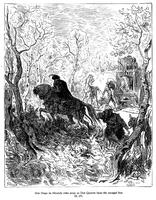
Don Quixote
Gustave Dore
Journey to the Center of the Earth
Edouard Riou
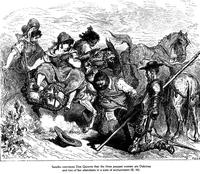
Don Quixote
Gustave Dore
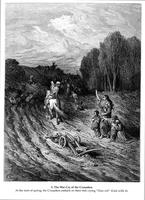
The War Cry of the Crusaders
Gustave Dore
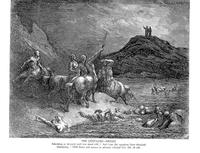
The Centaurs--Nessus
Gustave Dore
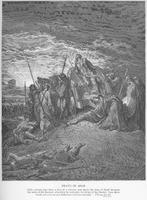
The Death of Ahab
Gustave Dore
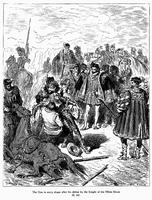
Don Quixote
Gustave Dore
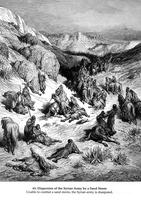
Dispersion of the Syrian Army by a Sand Storm
Gustave Dore
Don Quixote
Gustave Dore
Don Quixote
Gustave Dore
Burning of Dulcin and His Wife, Novarra, AD 1308
Jan Luyken
Don Quixote
Gustave Dore
The Spies Return from the Promised Land
Gustave Dore