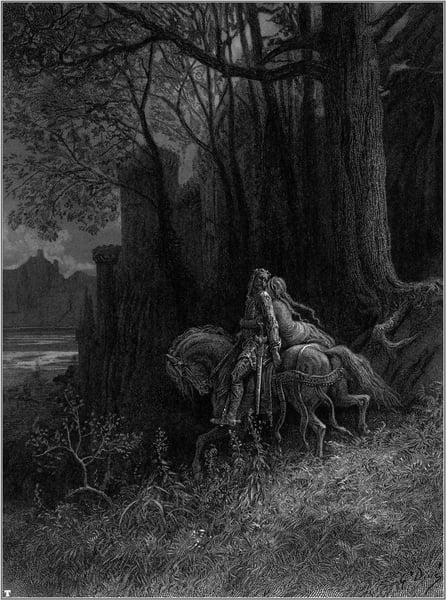
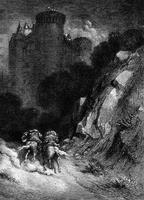
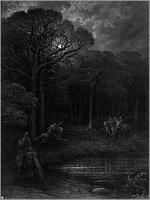
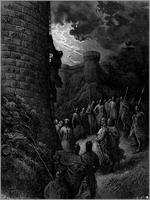
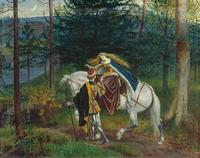
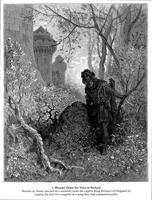
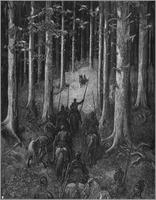
The significance of Gustave Doré’s Geraint and Enid Ride Away lies in its embodiment of Romantic ideals within the realm of illustration. As a work of Romanticism, it elevates a narrative moment from Arthurian legend—the departure of Geraint and Enid from court—into a scene charged with emotional tension, medieval atmosphere, and a sublime sense of journey. Doré’s mastery of chiaroscuro and dramatic composition, typical of the style, uses shadow and light to underscore the couple’s psychological weight and the perilous, untamed landscape that surrounds them. The illustration is not merely decorative; it functions as a visual poem, intensifying the literary source material (often Tennyson’s Idylls of the King) by focusing on the human drama—love, duty, and uncertainty. Within the Romantic period, Doré’s illustration stands out for its ability to merge meticulous detail with sweeping, emotional grandeur, making the invisible emotions of the text palpable. It demonstrates how illustration can achieve the same lofty, evocative power as history painting, affirming the genre’s significance in the 19th-century Romantic imagination.