
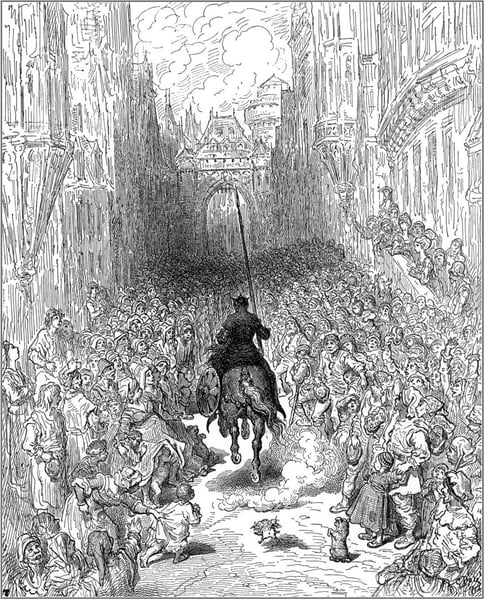
Gustave Dore sanatçısının Orlando Furioso eseri hakkında uzman analizi
Tarz: Romanticism · Tür: illustration
As an expert art historian, I will analyze Gustave Doré’s Orlando Furioso, focusing on its significance within the Romanticist movement and the illustration genre.
Artwork: Orlando Furioso
Artist: Gustave Doré
Style: Romanticism
Genre: Illustration
Analysis:
Gustave Doré’s illustrations for Ludovico Ariosto’s epic poem Orlando Furioso are a pinnacle of Romantic book illustration, merging the era’s fascination with medieval chivalry, emotional intensity, and the sublime with Doré’s unmatched technical virtuosity. While Doré is often associated with the darker, gothic strains of Romanticism, his work on Orlando Furioso showcases the movement’s celebration of imagination, heroic adventure, and the supernatural.
Significance within Romanticism:
The Romantic period (late 18th to mid-19th century) prized emotion, individualism, and the dramatic power of nature, often looking to medieval and Renaissance sources for inspiration. Ariosto’s poem—a fantastical chivalric romance filled with knights, enchantresses, epic battles, and magical landscapes—was a perfect vehicle for Romantic expression. Doré’s illustrations amplify the poem’s sense of awe and peril. His use of dramatic chiaroscuro (strong contrasts of light and shadow), dynamic compositions, and sweeping, energized lines captures the Romantic sublime—the simultaneous terror and beauty of the natural and supernatural worlds. For instance, scenes of knights confronting monstrous beasts or navigating stormy skies evoke the Romantic theme of humanity overwhelmed by forces beyond their control, yet striving for transcendence.
Significance as Illustration:
Doré revolutionized illustration as a respected artistic genre. Unlike mere decorative accompaniment, his images are fully realized narrative works that interpret and expand the text. In Orlando Furioso, his attention to architectural and landscape detail—from crumbling castles to dense forests—creates immersive, atmospheric worlds. Each engraving functions as a self-contained drama, with fluid, almost cinematic motion. Doré’s compositions often lead the viewer’s eye through spiraling or diagonal paths, mirroring the poem’s episodic, adventurous structure. His ability to convey complex emotions—rage, despair, love, and wonder—through subtle facial expressions and bodily tension elevates the illustration from a supportive role to an independent art form.
What Makes It Significant:
- Mastery of the medium: Doré’s wood engravings (often later transferred to steel plates) achieve an unprecedented level of detail and tonal range, making each print a rich, nuanced artwork.
- Influence on visual storytelling: Doré’s illustrations for Orlando Furioso influenced later fantasy and adventure art, from cinematic storyboards to graphic novels. His treatment of epic scale and heroic figures set a standard for how medieval romance could be visually reimagined.
- Synthesis of text and image: Few illustrators have matched Doré’s ability to distill a poem’s core themes—madness, love, war, and magic—into a single, iconic frame. His image of the titular hero Orlando losing his sanity, for example, becomes a symbol of Romantic obsession and the destructiveness of passion.
In conclusion, Doré’s Orlando Furioso is significant because it exemplifies Romanticism’s love of the fantastic and the emotional, while demonstrating how illustration can achieve the status of high art. Through his virtuosic linework and dramatic vision, Doré not only illuminated Ariosto’s text but also created an indelible visual lexicon for the heroic-fantastic genre.
Görsel olarak benzer
İlişkili kompozisyon ve renk paletine sahip 20 eser
Don Quixote
Gustave Dore
Don Quixote
Gustave Dore
Entry of the Crusaders in Constantinople in 1204
Gustave Dore
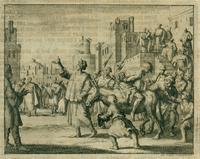
Johannes, Merchent of Cordoba, Being Taken for Execution, AD 850
Jan Luyken
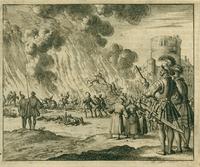
Burning of 180 Albigensians, AD 1210
Jan Luyken
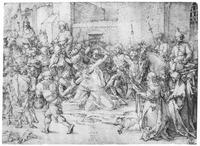
The Cross of Christ with Saint Veronica
Albrecht Durer
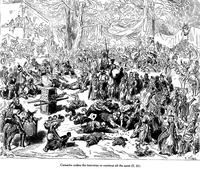
Don Quixote
Gustave Dore
Don Quixote
Gustave Dore
David Attacks the Ammonites
Gustave Dore
Burning of Clement the Scotchman, AD 756
Jan Luyken
The triumph of Mordechai
Rembrandt
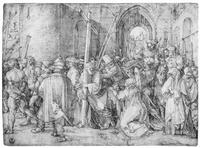
The Cross of Christ
Albrecht Durer
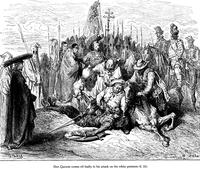
Don Quixote
Gustave Dore
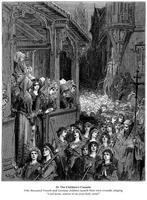
The Children's Crusade in 1212
Gustave Dore
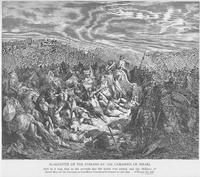
The Israelites Slaughter the Syrians
Gustave Dore
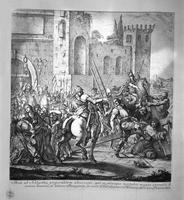
Jesus carried to Calvary
Giovanni Battista Piranesi
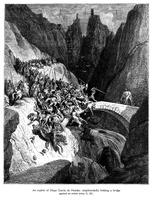
Don Quixote
Gustave Dore
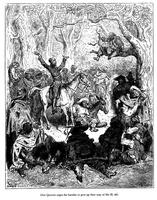
Don Quixote
Gustave Dore
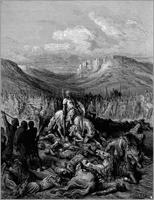
Glorious death of Jacques de Maille Marshal of the temple
Gustave Dore
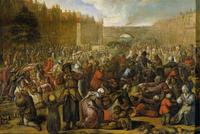
Distribution of Herring and White Bread During the Siege of Leiden 1574
Otto van Veen