
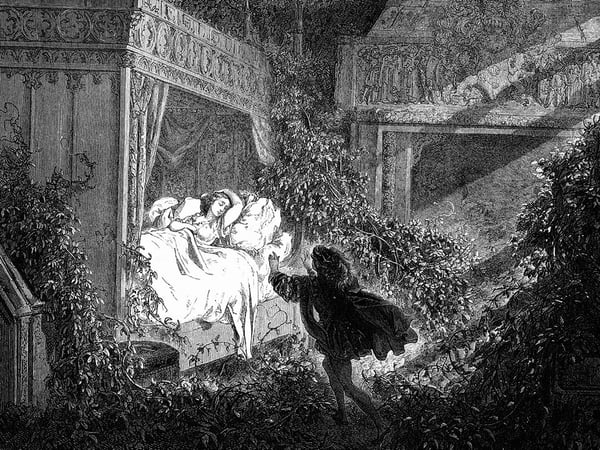
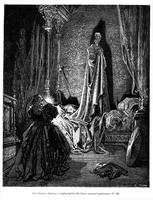
Reclining Upon A Bed Was A Princess Of Radiant Beauty
Dettagli
Analisi esperta di Reclining Upon A Bed Was A Princess Of Radiant Beauty di Gustave Dore
Stile: Romanticism · Genere: illustration
Expert Analysis: "Reclining Upon A Bed Was A Princess Of Radiant Beauty" by Gustave Doré
As a work of Romanticism in the illustration genre, this piece captures the movement’s core preoccupation with dramatic emotion, idealized beauty, and narrative imagination. While the supplied facts are limited, the title itself—lyrical and almost fairy-tale-like—signals Doré’s mastery in translating literary or legendary scenes into visually compelling, atmospheric images.
Significance within Romanticism:
Romanticism rejected Neoclassical restraint in favor of intense feeling, the exotic, and the sublime. Doré’s illustration of a “princess of radiant beauty” reclining on a bed embodies the Romantic fascination with medievalism, fantasy, and the aristocratic sublime. The description of her as “radiant” suggests a luminous treatment—likely achieved through Doré’s signature use of dramatic chiaroscuro and intricate linework. This technique, typical of his book illustrations, heightens the dreamlike, emotional quality of the scene, drawing the viewer into a private, sensual moment. The reclining pose itself, common in Romantic depictions of passive feminine beauty, reinforces themes of longing, mystery, and the idealized “fairytale” view of womanhood that pervaded 19th-century Romantic art.
Significance within Doré’s illustrative practice:
Doré elevated illustration from mere accompaniment to a powerful narrative art form. Works like this demonstrate his ability to compress complex literary emotions—romance, awe, melancholy—into a single static image. The title’s phrasing (“reclining upon a bed was a princess”) echoes the pacing of a story, inviting the viewer to imagine the tale unfolding. As a Romantic illustrator, Doré’s significance lies in making the invisible world of imagination tangible. Here, the “radiant beauty” of the princess is not just a visual fact but a symbol of the Romantic ideal: an unattainable, transcendent beauty that stirs the soul. This piece would be typical of his work for projects like The Rime of the Ancient Mariner or Paradise Lost, where he merged poetic text with haunting, detailed imagery.
Conclusion:
Though sparse in concrete attributes, the artwork is significant as a quintessential Romantic illustration: it prioritizes emotive atmosphere, narrative suggestion, and idealized form over realism. Doré’s prowess ensures that even a single, static princess evokes the grand, emotionally charged world of Romantic myth and legend.
Visivamente simili
20 opere con composizione e palette affini
King David at prayer
Rembrandt
Don Quixote
Gustave Dore
Fulk-Nerra Assailed by the Phantoms of His Victims
Gustave Dore
Edward I of England kills his would be assassin in June 1272
Gustave Dore
The Adventure of the Chamber Pot, plate four from Scènes du Roman Comique
Jean-Baptiste Oudry
Birth of Mary
Albrecht Durer
Robbery
Fyodor Bronnikov
Don Quixote
Gustave Dore
Christ raises Jairus
Rembrandt
Death of the Virgin
Rembrandt
In Bed
Rembrandt
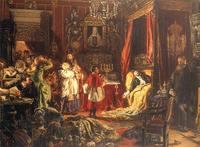
Death of Sigismund Augustus at Knyszyn
Jan Matejko
The Life of St. Ignatius Loyola. Plate 1. Ignatius recovers from his wounds at Loyola.
Carlos Saenz de Tejada
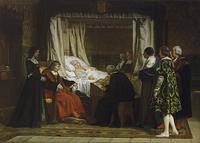
Queen Isabel la Católica dictating her last will and testament
Eduardo Rosales
The Widow
Pavel Fedotov
Study for the will of Isabella the Catholic
Eduardo Rosales
La muerte de Galeswinthe
Jean-Paul Laurens
Honoric, King of the Vandals, Eaten by Worms and Lice, AD 477
Jan Luyken
A Birth Chamber, Seventeenth Century
Sir Lawrence Alma-Tadema
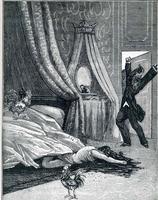
Illustration to "A Week of Kindness"
Max Ernst