Analisi esperta di Christ raises Jairus di Rembrandt
Stile: Baroque · Genere: religious painting
Expert Art Historical Analysis: "Christ raises Jairus" by Rembrandt
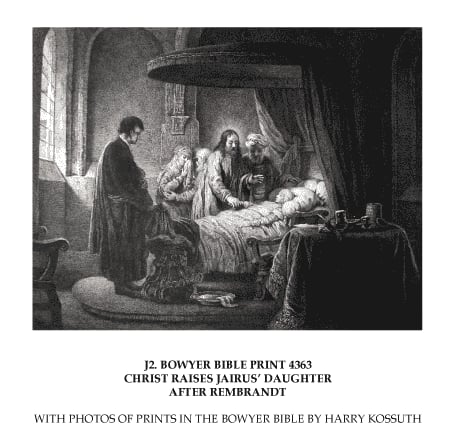
As a quintessential Baroque religious painting, Rembrandt’s work is significant for the way it transforms a biblical miracle into an intensely human, emotionally charged moment. Operating within the Baroque idiom, Rembrandt eschews idealized grandeur in favor of psychological realism and dramatic chiaroscuro. The narrative—Christ raising the daughter of Jairus—is rendered not as a distant spectacle, but as a private, intimate scene where divine power meets human grief.
The painting’s significance lies in its Baroque focus on immediacy and pathos. Rather than depicting the miracle at its climax, Rembrandt often captures the suspense before the act, inviting the viewer into the room with the mourners and the anxious father. The use of deep shadow and a concentrated, warm light (a hallmark of Rembrandt’s mature style) draws attention to Christ’s serene face and hands, contrasting with the bewildered expressions of those around him. This treatment elevates a standard religious subject into a meditation on faith, doubt, and the boundary between life and death.
Within the genre of religious painting, Rembrandt’s approach was revolutionary. He humanizes the figures—Jairus is not a generic supplicant but a man of status rendered humble, and Christ is at once authoritative and tender. The work exemplifies the Baroque period’s move to make religious experience visceral and personal, engaging the viewer’s empathy rather than simply illustrating doctrine. In this, "Christ raises Jairus" stands as a masterful synthesis of Baroque dynamism, spiritual gravity, and Rembrandt’s unparalleled ability to find the eternal in the everyday.
Museum / Gallery
Visivamente simili
20 opere con composizione e palette affini
In Bed
Rembrandt
Death of the Virgin
Rembrandt
Fulk-Nerra Assailed by the Phantoms of His Victims
Gustave Dore
Don Quixote
Gustave Dore
King David at prayer
Rembrandt
Birth of Mary
Albrecht Durer
Study for the will of Isabella the Catholic
Eduardo Rosales
The Adventure of the Chamber Pot, plate four from Scènes du Roman Comique
Jean-Baptiste Oudry
Don Quixote
Gustave Dore
Reclining Upon A Bed Was A Princess Of Radiant Beauty
Gustave Dore
Death of the Virgin
Albrecht Durer
Death of the Virgin
Rembrandt
Edward I of England kills his would be assassin in June 1272
Gustave Dore
Honoric, King of the Vandals, Eaten by Worms and Lice, AD 477
Jan Luyken
Illustration to "A Week of Kindness"
Max Ernst
The Life of St. Ignatius Loyola. Plate 1. Ignatius recovers from his wounds at Loyola.
Carlos Saenz de Tejada
Jezebel Promising Naboth's Vineyards to King Ahab
Lucas van Leyden
The Presentation in the Temple
Giovanni Battista Piranesi
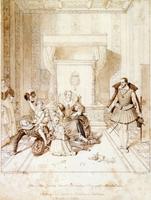
Henry IV Playing with His Children
Jean Auguste Dominique Ingres
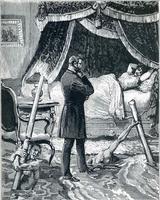
Illustration to "A Week of Kindness"
Max Ernst