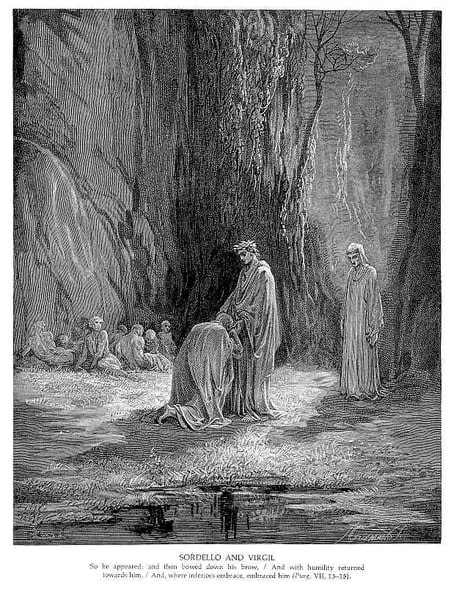
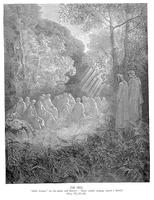
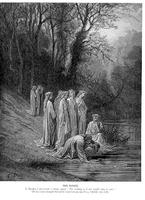
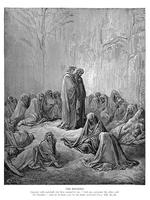
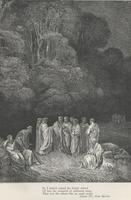
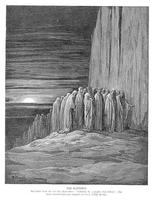
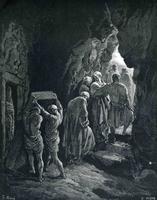
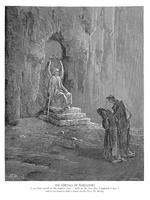
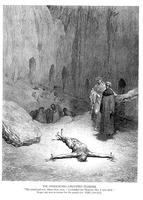
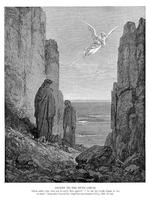
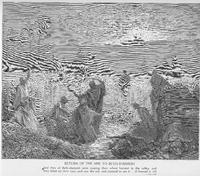
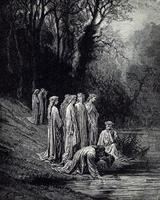
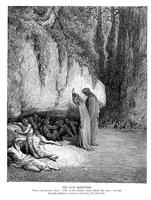
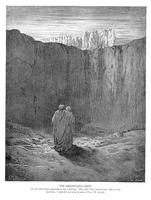
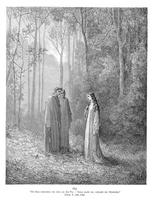
This illustration, created by Gustave Doré for Dante’s Divine Comedy, exemplifies the Romantic fascination with the sublime, medievalism, and intense emotional expression. In the scene, the poet Sordello and Virgil meet in the Ante-Purgatory, their encounter charged with a profound sense of exile and poetic kinship.
Doré’s composition is dominated by towering, craggy cliffs and a vast, stormy sky, dwarfing the two figures and evoking the Romantic ideal of nature’s overwhelming power. The dramatic chiaroscuro—deep shadows against sharp pockets of light—directs attention to the figures’ gestures and faces, capturing the moment of recognition and shared longing. The precise, intricate linework typical of Doré’s illustrations lends the scene a dreamlike yet tangible texture, bridging the supernatural narrative with a grounded, human pathos.
Significant within Romanticism, this work transforms a narrative illustration into a meditation on memory, loss, and the artist’s role as a guide through darkness. Doré’s ability to blend theatrical grandeur with intimate psychological depth marks this as a masterful example of Romantic book illustration, where the image becomes as evocative as the text it accompanies.