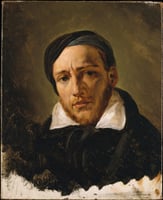
Expert analysis of Théodore Géricault’s Mameluke defending wounded trumpete
Style: Romanticism · Genre: battle painting
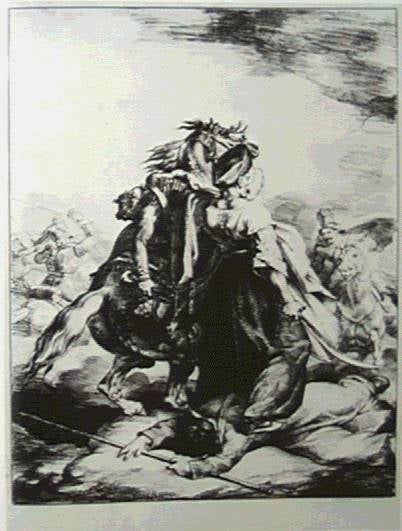
Expert Analysis of Mameluke Defending Wounded Trumpeter by Théodore Géricault
Théodore Géricault’s Mameluke Defending Wounded Trumpeter is a vivid exemplar of Romanticism in the battle-painting genre. The work captures a fleeting, chaotic moment of combat, emphasizing the emotional intensity and psychological drama that define the Romantic movement. Géricault departs from the orderly, heroic conventions of Neoclassical battle scenes; instead, he zeroes in on a raw, intimate act of courage amid the brutality of war.
The central confrontation—a Mameluke warrior shielding a helpless trumpeter—highlights Romanticism’s fascination with the exotic ‘other’ (the Mameluke as a symbol of fierce, foreign chivalry) and its preoccupation with human vulnerability. The wounded trumpeter, slumped and passive, contrasts sharply with the defender’s dynamic, protective stance, creating a tension that underscores the Romantic ideal of individual heroism confronting mortality. Géricault’s loose, vigorous brushwork and dramatic chiaroscuro intensify the sense of urgency, while the diagonal composition thrusts the viewer into the swirl of action.
Significantly, this painting reveals Géricault’s shift toward a more personal, emotionally charged realism—a hallmark of his later, larger masterpieces like The Raft of the Medusa. Here, the battle is not presented as a grand, propagandistic tableau but as a momentary, deeply human struggle, making it a pivotal work within Romanticism’s redefinition of history painting.
Visually similar
20 works with related composition and palette
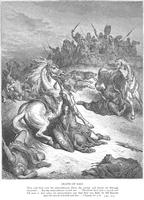
The Death of Saul
Gustave Dore
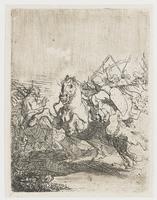
A cavalry fight
Rembrandt
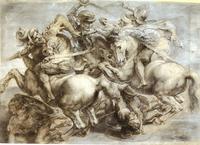
Copy of Battle of Anghiari, the lost painting by Leonardo da Vinci
Peter Paul Rubens
The Small Lion Hunt
Rembrandt
The Angel Is Sent to Deliver Israel
Gustave Dore
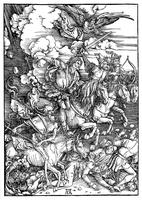
The Four Horsemen of the Apocalypse, Death, Famine, Pestilence and War
Albrecht Durer
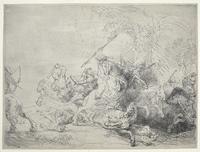
The large lion hunt
Rembrandt
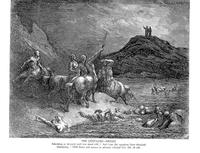
The Centaurs--Nessus
Gustave Dore
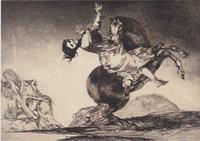
Abducting horse
Francisco Goya
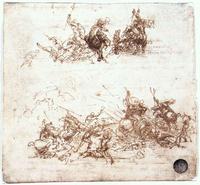
Page from a notebook showing figures fighting on horseback and on foot
Leonardo da Vinci
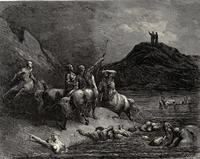
The Inferno, Canto 12
Gustave Dore
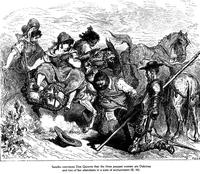
Don Quixote
Gustave Dore
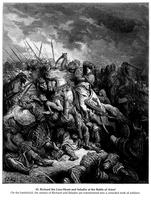
Richard I the Lionheart in battle at Arsuf in 1191
Gustave Dore
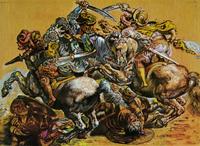
Copy of a Rubens Copy of a Leonardo
Salvador Dali
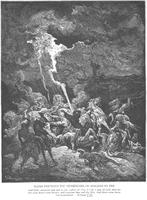
Elijah Destroys the Messengers of Ahaziah
Gustave Dore
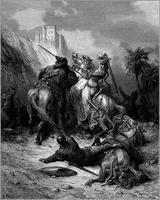
A Heroine Florine of Burgundy
Gustave Dore
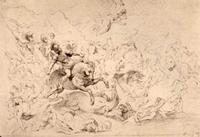
The Damage of Sennaherib
Peter Paul Rubens
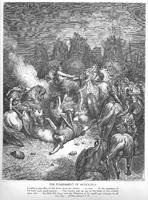
The Punishment of Antiochus
Gustave Dore
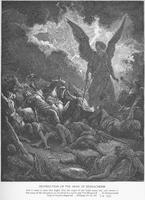
Sennacherib's Army Is Destroyed
Gustave Dore
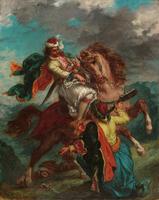
A Turk Surrenders to a Greek Horseman
Eugene Delacroix