Análisis experto de The Dishonorable Truce de Gustave Dore
Estilo: Romanticism · Género: illustration
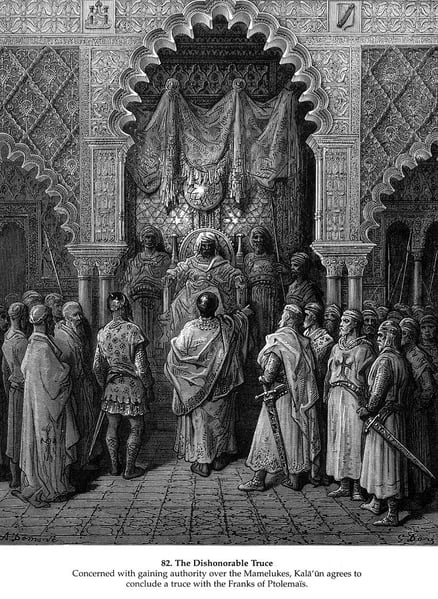
Expert Analysis of "The Dishonorable Truce" by Gustave Doré
As an illustration firmly rooted in the Romantic tradition, Gustave Doré’s The Dishonorable Truce exemplifies the era’s deep fascination with high drama, human emotion, and moral ambiguity. Though the specific narrative source is not detailed here, the work is significant for how it encapsulates Romanticism’s core principles through the medium of illustration—a genre Doré elevated to fine art.
Significance within Romanticism and Illustration
-
Emotional Intensity and Moral Conflict: The very title, The Dishonorable Truce, suggests a moment of psychological tension and betrayal, a favorite Romantic theme. Doré masterfully conveys the inner turmoil of the figures, likely through expressive postures and facial details, forcing the viewer to confront the ethical weight of the scene. This aligns with Romanticism’s rejection of Neoclassical restraint in favor of raw, often troubling, human experience.
-
Dramatic Composition and Chiaroscuro: Doré’s illustrative style is renowned for its theatrical lighting and deep shadows—a hallmark of Romantic visual language. In this work, the stark contrast between light and dark would not only create a sense of spatial depth but also symbolize the clash between honor and treachery, good and evil. This technique intensifies the narrative and underscores the sublime, a key Romantic concept where beauty and terror coexist.
-
Narrative as Visual Spectacle: Doré’s illustrations often served as companions to literary epics (e.g., Dante, Milton, Cervantes), and his approach here reflects that legacy. The work likely functions as a self-contained story, capturing a climactic, morally charged moment with cinematic urgency. For Romanticism, the “illustration” was not a lesser art; it was a powerful vehicle for storytelling that could move the public and stir the imagination.
-
Mastery of Detail and Atmosphere: Doré’s meticulous engraving technique allows him to build a richly textured world—from billowing clouds to crumbling architecture or weathered armor—that immerses the viewer in the scene’s historical or fantastical setting. This attention to atmosphere reinforces the Romantic ideal of art as an immersive, emotional experience rather than mere decoration.
In summary, The Dishonorable Truce stands as a quintessential example of Gustave Doré’s contribution to Romanticism: an illustration that is not merely ancillary but a profound, standalone work of dramatic tension and moral complexity, demonstrating how the genre could achieve the same emotional and intellectual weight as painting or poetry.
Visualmente similares
20 obras con composición y paleta relacionadas
The Emir's Head Shown in the Seraglio
Gustave Dore
Astonishment of the Crusaders at the Wealth of the East
Gustave Dore
St. Francis of Assisi
Gustave Dore
An Arab Sage
Rudolf Ernst
Les Présents D'un Pacha
Benjamin Constant
The Pasha's exit
Alfred Dehodencq
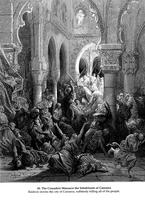
The Crusaders massacre the inhabitants of Caesarea
Gustave Dore
Two Warriors in the Alhambra Palace, the Court of Lions in the Background
Rudolf Ernst
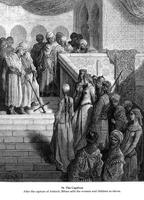
The Captives
Gustave Dore
Cordova
John Frederick Lewis
Don Quixote
Gustave Dore
A Royal Palace in Morocco
Benjamin Constant
Solomon Receives the Queen of Sheba
Gustave Dore
The Favorite of the Farm
Rudolf Ernst
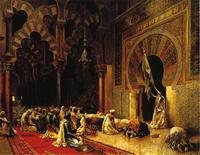
Interior of the Mosque at Cordoba
Edwin Lord Weeks
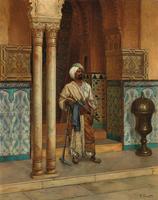
The Palace Guard
Rudolf Ernst
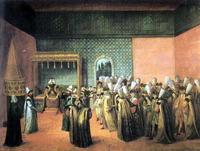
French Ambassador le Vicomte De Andrezel received by Sultan Ahmed III on October 10, 1724, audience with the Sultan
Jean Baptiste Vanmour
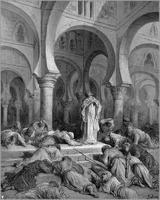
Invocation to Muhammad
Gustave Dore
Her master's arrival
Gustavo Simoni
Columbus Before the Queen
Emanuel Leutze