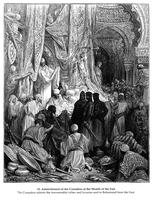
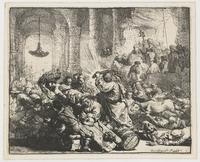
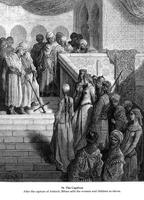
Expert Analysis: The Crusaders Massacre the Inhabitants of Caesarea by Gustave Doré
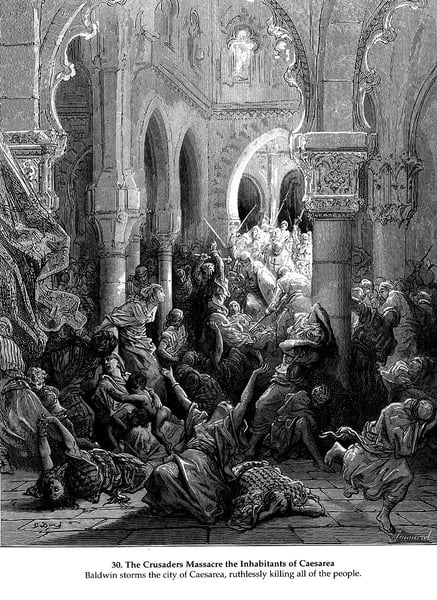
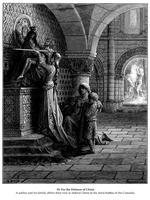
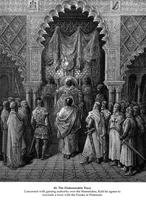
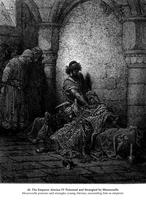
This powerful illustration, executed within the Romantic tradition, stands as a stark example of Gustave Doré’s ability to merge meticulous historical detail with profound emotional intensity. The work’s significance lies in how it uses the Romantic fascination with the sublime and the terrible to transform a medieval chronicle into a visceral commentary on the horrors of religious conflict.
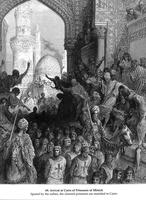
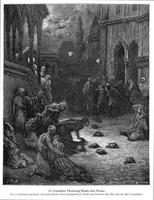
Doré’s composition is a masterpiece of controlled chaos. He focuses not on the glory of conquest but on the raw human cost: writhing bodies, anguished faces, and the brutal, impersonal machinery of slaughter. The interplay of deep shadow and stark light—a hallmark of Romantic chiaroscuro—heightens the drama and directs the viewer’s eye to the central tragedy. Unlike heroizing history paintings, this illustration refuses to romanticize the crusaders; instead, it depicts them as faceless agents of destruction, emphasizing the mass rather than the individual.
As an illustration, this piece was crucial in shaping the 19th-century popular imagination of the Crusades. Doré’s work was widely disseminated, making this graphic depiction of violence accessible to a broad public. In doing so, it amplifies Romanticism’s core tension: the awe of historical grandeur set against the horror of human cruelty. The artwork remains significant as a potent, unflinching visual document that uses Romantic aesthetic devices to critique, rather than celebrate, a violent past.