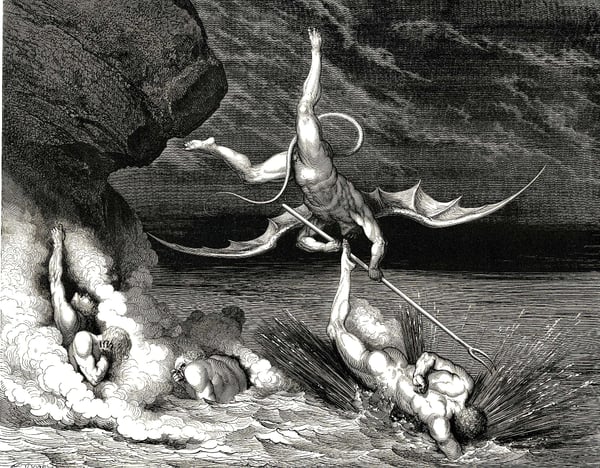
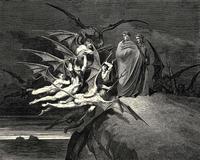
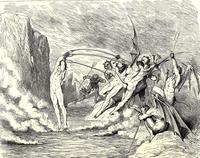
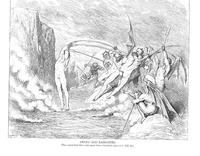
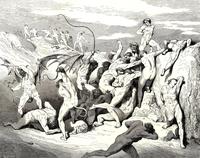
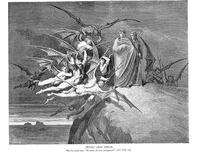
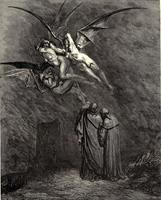
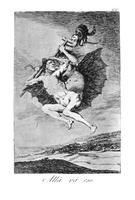
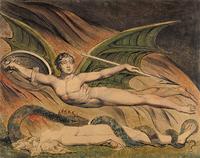
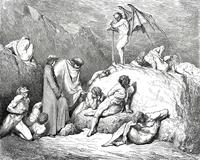
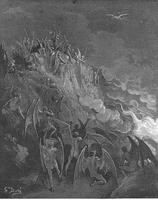
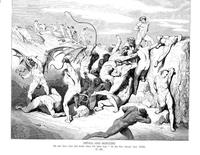
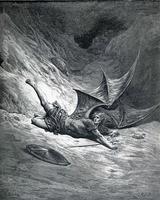
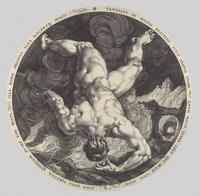
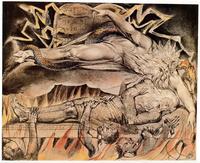
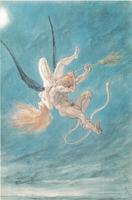
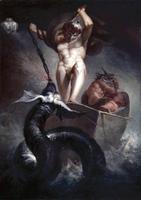
Gustave Doré’s The Inferno, Canto 22 is a masterful example of Romanticism applied to the genre of illustration, and its significance lies in how it transforms a narrative moment into a visceral, emotional spectacle. Doré harnesses the Romantic preoccupation with the sublime—the awe-inspiring and terrifying—by plunging the viewer into the chaotic, infernal world of Dante’s Divine Comedy. His dark, dramatic chiaroscuro and meticulous detail capture the grotesque energy of the scene (Canto 22 depicts demons tormenting sinners in a boiling pitch), making the viewer feel both captivated and unsettled. This work is pivotal because it elevates book illustration from mere accompaniment to a powerful, independent artistic statement, influencing how generations would visualize Dante’s hell. Within Romanticism, Doré’s blend of fantastical horror and human emotion—the contorted faces, the billowing smoke, the muscular demons—epitomizes the era’s love for the irrational, the medieval, and the emotionally overwhelming, securing the illustration as a high art form capable of expressing the most profound and terrifying visions.