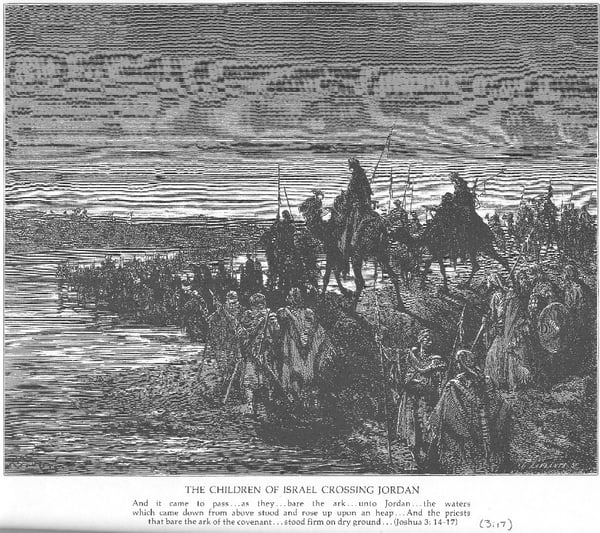
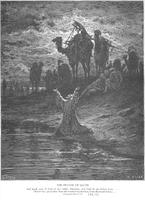
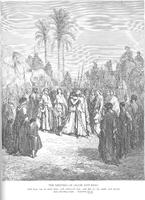
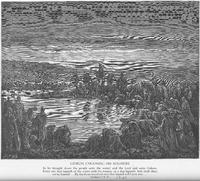
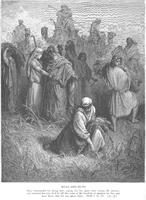
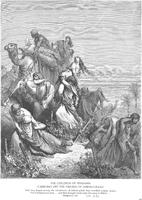
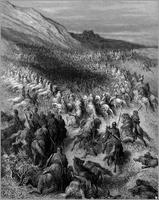
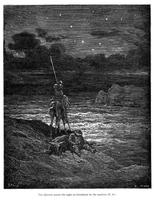
As a Romantic religious painting, The Israelites Cross the Jordan River by Gustave Doré is significant for its dramatic fusion of biblical narrative with the Romantic emphasis on the sublime and the emotional. Doré transforms this Old Testament miracle into a grand, awe-inspiring spectacle. The composition likely heightens the contrast between the human pilgrims—their vulnerability and faith—and the overwhelming, supernatural intervention of God, conveyed through turbulent skies, rushing waters, and stark chiaroscuro. This exemplifies Romanticism’s departure from Neoclassical restraint, instead prioritizing intense emotion, dynamic movement, and the portrayal of divine power as both terrifying and majestic. Doré’s mastery of scale and detail invites the viewer to experience the Israelites’ journey not as a static historical event, but as a living, epic drama—a hallmark of his contribution to religious painting in the Romantic era.