Analisi esperta di Gideon Chooses 300 Soldiers di Gustave Dore
Stile: Romanticism · Genere: religious painting
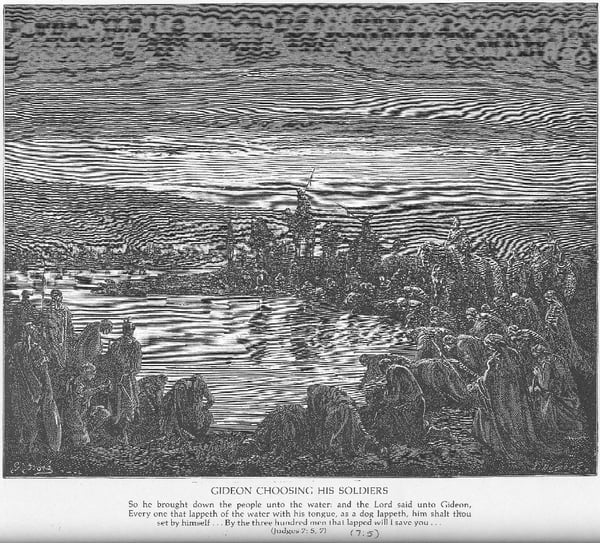
Expert Analysis: "Gideon Chooses 300 Soldiers" by Gustave Doré
Style & Period Significance
Gustave Doré’s Gideon Chooses 300 Soldiers is a defining example of Romanticism in religious painting, a genre he transformed through his dramatic, emotionally charged visual narrative. Romanticism emphasized the sublime, the heroic, and the individual’s encounter with the divine—all of which Doré captures here. The work’s significance lies in its masterful use of chiaroscuro and monumental scale to heighten spiritual tension, drawing viewers into the biblical story’s pivotal moment of faith and divine selection.
Artistic Execution
Doré’s composition focuses on Gideon’s test at the spring of Harod (Judges 7), where God instructs him to reduce his army to 300 men based on how they drink water. Doré isolates Gideon as a central, commanding figure, surrounded by a swirling mass of soldiers. The lighting—a hallmark of Romantic painting—pierces through darkness to illuminate Gideon’s face and the chosen few, while shadows obscure the rest, symbolizing divine favor versus human fear. The muscular, expressive poses and dramatic gestures convey the confusion, courage, and solemnity of the moment. Doré’s technical precision in engraving (though this was a painting or illustration) allows for intricate detail, from armor textures to the emotional nuances of the soldiers’ faces.
Religious & Narrative Depth
As a religious work, the painting transcends mere illustration. It underscores the Romantic theme of faith tested by overwhelming odds—Gideon’s obedience contradicts military logic, yet his trust in God’s plan becomes the bedrock of Israel’s victory. Doré emphasizes the psychological weight of this choice: the 300 are not depicted as triumphant, but as humble, anxious figures stepping into the unknown. This internalized drama aligns with Romanticism’s shift from static piety to dynamic, personal spirituality.
Enduring Impact
Doré’s rendering of this lesser-known Old Testament episode amplifies its timeless message: that strength lies not in numbers but in divine purpose. The painting exemplifies how Romantic religious art could render biblical narratives as visceral, emotionally complex events—making them accessible and deeply moving to 19th-century audiences. Its legacy endures as a benchmark for how Romanticism and religious devotion can merge to create profound, visually arresting storytelling.
Visivamente simili
20 opere con composizione e palette affini
The Ark Is Returned to Beth shemesh
Gustave Dore
Israelite Women Mourn with Jephthah's Daughter
Gustave Dore
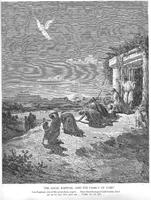
The Angel Raphael and the Family of Tobit
Gustave Dore
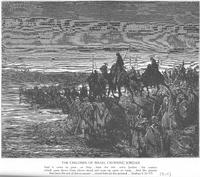
The Israelites Cross the Jordan River
Gustave Dore
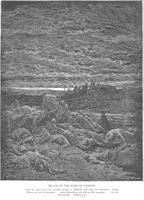
The Death of Gideon's Sons
Gustave Dore
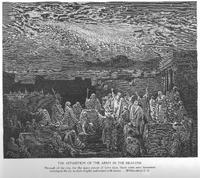
The Army Appears in the Heavens
Gustave Dore
The Vessel
Gustave Dore
The Ninth Plague. Darkness
Gustave Dore
Traitors--Bocca Degli Abati
Gustave Dore
The Fifth Plague. Livestock Disease
Gustave Dore
Elders Gathering
Nicholas Roerich
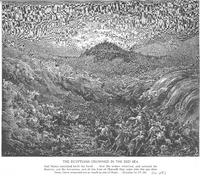
The Egyptians Drown in the Sea
Gustave Dore
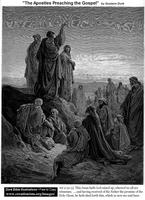
The Apostles Preaching The Gospel
Gustave Dore
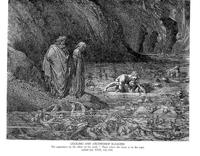
Ugolino and Archbishop Ruggieri
Gustave Dore
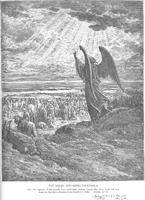
An Angel Appears to the Israelites
Gustave Dore
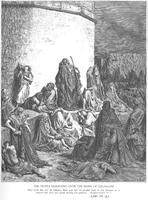
The People Mourning over the Ruins of Jerusalem, Lamentations 1:1-2
Gustave Dore
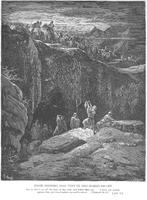
David Shows Saul How He Spared His Life
Gustave Dore
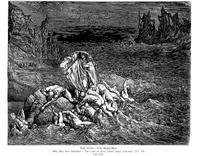
The Styx--The Irascible
Gustave Dore
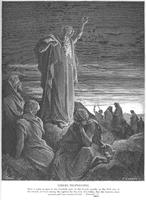
The Prophet Ezekiel
Gustave Dore
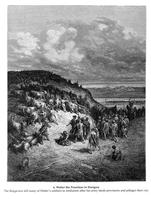
Walter the Penniless in Hungary
Gustave Dore