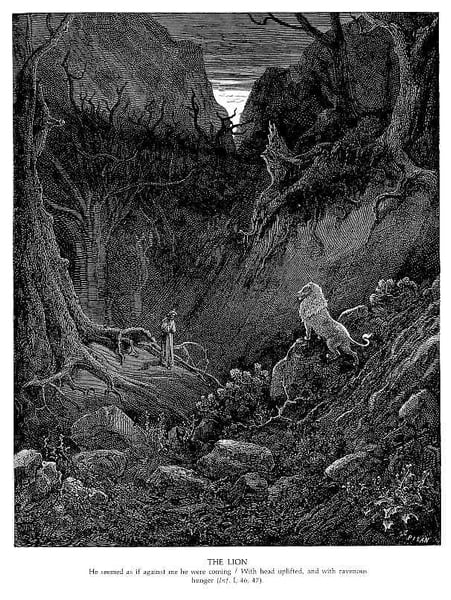
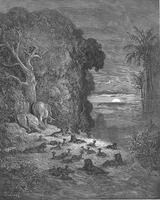
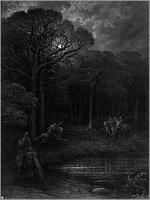
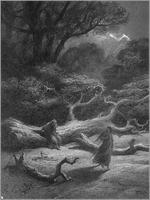
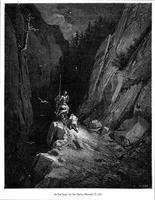
In Gustave Doré’s “The Lion,” the artist harnesses the key traits of Romanticism—intense emotion, dramatic contrasts, and the sublime power of nature—within the illustrative genre. Although the composition depicts a single majestic lion, Doré’s treatment elevates the animal beyond mere naturalistic study. The work is significant for its masterful use of chiaroscuro: deep, velvety shadows cloak the beast’s surroundings, while a narrow shaft of light carves out its muscular form and piercing gaze. This theatrical lighting, typical of Romantic painting, invests the lion with a sense of raw, untamed energy and almost supernatural presence.
As an illustration, “The Lion” exemplifies how Doré transformed commercial book art into a vehicle for high artistic ambition. His intricate linework and controlled cross-hatching create rich textures—from the coarse mane to the rough rock against which the lion crouches—demonstrating that even in a printed medium, the emotional depth and heroic scale of Romanticism could be fully realized. The work thus stands as a testament to Doré’s ability to merge narrative illustration with the period’s fascination with the wild and the sublime, making it a defining image of Romantic visual storytelling.