
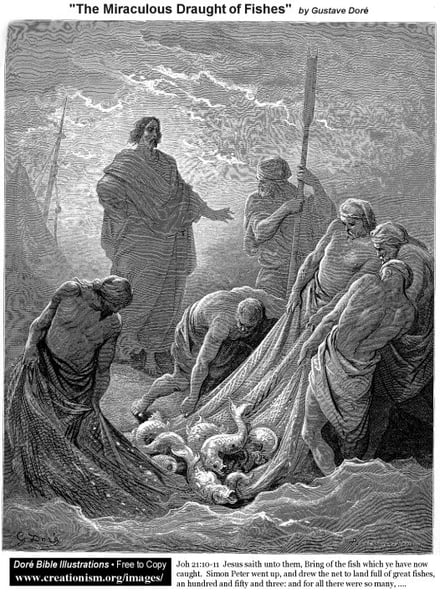
Analisi esperta di The Miraculous Draught Of Fishes di Gustave Dore
Stile: Romanticism · Genere: religious painting
Analysis of "The Miraculous Draught of Fishes" by Gustave Doré
As a Romantic religious painting, Gustave Doré’s The Miraculous Draught of Fishes derives its significance from the way it synthesizes intense emotional expression—a hallmark of Romanticism—with the profound spiritual gravity of a biblical miracle. The work depicts the Gospel account in which Jesus instructs Simon Peter to cast his nets after a fruitless night, resulting in an overwhelming catch that precipitates Peter’s recognition of Christ’s divinity.
Romantic Sublime and Dramatic Composition
True to Romantic sensibilities, Doré rejects static, idealized religious scenes in favor of a dynamic, almost theatrical confrontation between human limitation and divine power. The composition thrusts the viewer into the heart of the miracle: the boat tilts under the weight of gleaming, thrashing fish, while the disciples react with a mixture of terror, awe, and wonder. The use of chiaroscuro—deep shadows pierced by a supernatural glow from Christ’s figure—amplifies the emotional tension. This light does not merely illuminate; it signifies the intrusion of the sublime into the mundane, overwhelming the senses and provoking an existential response. Doré’s meticulous rendering of textures (wet nets, churning water, the straining muscles of the fishermen) grounds the miraculous in a tangible, visceral reality, making the divine feel both imminent and overwhelming.
Religious Meaning Through Human Emotion
As a religious painting, the work’s significance lies in its focus on the human experience of the sacred. Rather than emphasizing doctrinal symbols or iconography, Doré centers on Peter’s startled posture and the disciples’ awe-struck faces. The “draught of fishes” becomes a metaphor for spiritual awakening: the impossible abundance of the catch mirrors the overwhelming grace of faith. The painting captures the moment before words—the silent, shattering realization that one is in the presence of the divine. This aligns with Romanticism’s preoccupation with intense personal experience and the limits of human understanding.
Significance Within Romantic Religious Art
Doré’s work stands out for its refusal to sentimentalize the biblical story. Instead, it presents the miracle as a terrifying, humbling encounter—a force that destabilizes the ordinary world. This destabilization is the core of Romantic expression: art as a vehicle for encountering the sublime, the vast, and the unknowable. By placing the viewer amid the confusion and raw emotion of the disciples, Doré transforms a familiar religious narrative into an immediate, awe-inspiring event. The painting thus exemplifies how Romanticism reinvented religious painting: not as calm devotion, but as a thunderous dialogue between human frailty and divine mystery.
Visivamente simili
20 opere con composizione e palette affini
The Styx--Philippo Argenti
Gustave Dore
Death Of Ananias
Gustave Dore
Richard I the Lionheart massacres captives in reprisal
Gustave Dore
The Transfiguration
Gustave Dore
The Portals of Dis
Gustave Dore
The Plague of Jerusalem
Gustave Dore
St. Paul At Ephesus
Gustave Dore
St. Paul Shipwrecked
Gustave Dore
The Judas Kiss
Gustave Dore
The Inferno, Canto 8
Gustave Dore
The Buyers And Sellers Driven Out Of Temple
Gustave Dore
Christ Presented To The People
Gustave Dore
The Baptism Of Jesus
Gustave Dore
Elijah Raises the Son of the Widow of Zarephath
Gustave Dore
The Judas kiss
Karl Bryullov
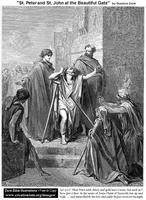
St. Peter And St John At Beautiful Gate
Gustave Dore
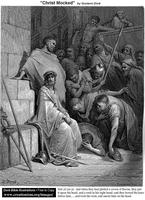
Christ Mocked
Gustave Dore
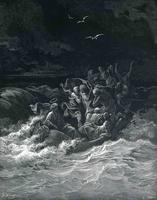
Abishai Saves David's Life
Gustave Dore
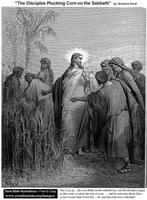
The Disciples Plucking Corn On The Sabbath
Gustave Dore
Thais
Gustave Dore