
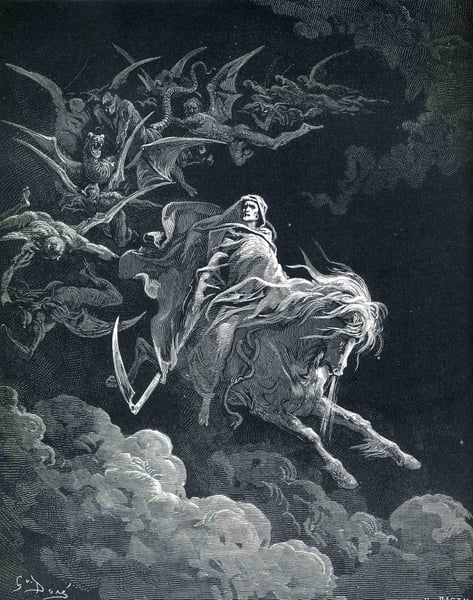
Expert analysis of Gustave Dore’s The Vision of Death
Style: Romanticism · Genre: religious painting
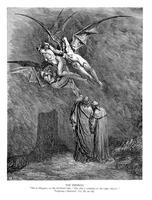
Expert Analysis: "The Vision of Death" by Gustave Doré
Gustave Doré’s The Vision of Death stands as a quintessential example of Romantic religious painting, merging the era’s fascination with the sublime, the macabre, and the transcendent. Executed with Doré’s characteristic virtuosity in chiaroscuro, the work channels the Romantic preoccupation with human mortality and the overwhelming power of the divine—or, in this case, the final judgment.
Significance within Romanticism
Romanticism prized intense emotion, the awe-inspiring force of nature, and the confrontation with the infinite. Here, Doré translates these ideals into a visionary tableau: Death is not merely a skeletal figure but an apocalyptic entity, often depicted as a towering, spectral rider or a vast, shadowy presence that dwarfs the human realm. The dramatic contrasts of light and dark heighten the sense of terror and awe, inviting the viewer to experience what Edmund Burke called the “sublime”—a mixture of fear and wonder in the face of overwhelming power. Doré’s use of intricate, swirling lines and monumental scale aligns with Romanticism’s rejection of neoclassical restraint in favor of raw, spiritual intensity.
Significance as a Religious Painting
While rooted in Christian iconography of the Last Judgment and the Four Horsemen (from the Book of Revelation), Doré’s vision transcends mere illustration. The work functions as a moral and existential meditation, typical of Romantic religious art that sought to evoke personal piety and cosmic dread rather than doctrinal instruction. The painting’s composition—often a lone, despairing human figure confronted by the vastness of Death—emphasizes the individual’s fragile position before eternity. This shift from collective salvation to individual crisis marks Doré’s contribution to 19th-century religious art, anticipating Symbolist and even Expressionist themes.
Overall
The Vision of Death is significant for its masterful synthesis of Romantic drama and religious solemnity. Doré’s ability to render the invisible—the very idea of mortality—with such palpable, gothic grandeur cements his place as a visionary artist capable of giving form to humanity’s deepest fears and most profound spiritual questions.
Museum / Gallery
Visually similar
20 works with related composition and palette
Paradise Lost
Gustave Dore
Pegasus
Georgi Mashev
Raging, Wotan, rides to the Rock
Arthur Rackham
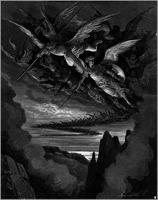
Paradise Lost
Gustave Dore
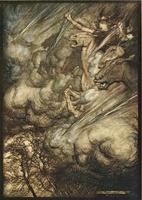
The ride of the Valkyries
Arthur Rackham
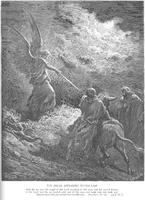
An Angel Appears to Balaam
Gustave Dore
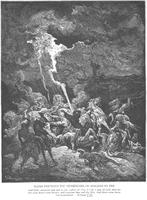
Elijah Destroys the Messengers of Ahaziah
Gustave Dore
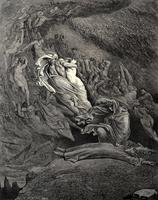
The Inferno, Canto 5
Gustave Dore
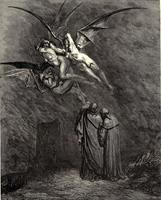
The Inferno, Canto 9
Gustave Dore
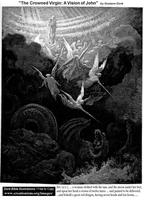
The Crowned Virgin Vision Of John
Gustave Dore
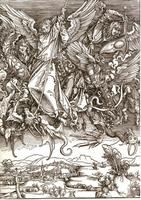
St. Michael and the Dragon, from a Latin edition
Albrecht Durer
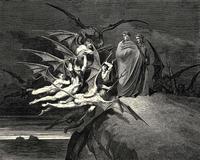
The Inferno, Canto 21
Gustave Dore
And now expecting Each hour their great adventurer, from the search Of foreign worlds
Gustave Dore
Mameluke defending wounded trumpete
Théodore Géricault
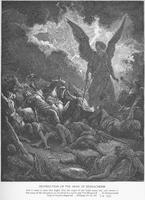
Sennacherib's Army Is Destroyed
Gustave Dore
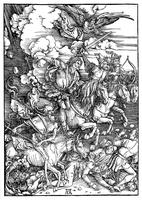
The Four Horsemen of the Apocalypse, Death, Famine, Pestilence and War
Albrecht Durer
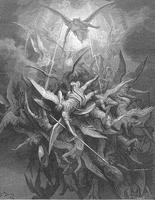
Him The Almighty Power Hurled Headlong Flaming from the Eternal Sky
Gustave Dore
A cavalry fight
Rembrandt
Abduction of Proserpine on a Unicorn
Albrecht Durer
The Erinnys
Gustave Dore