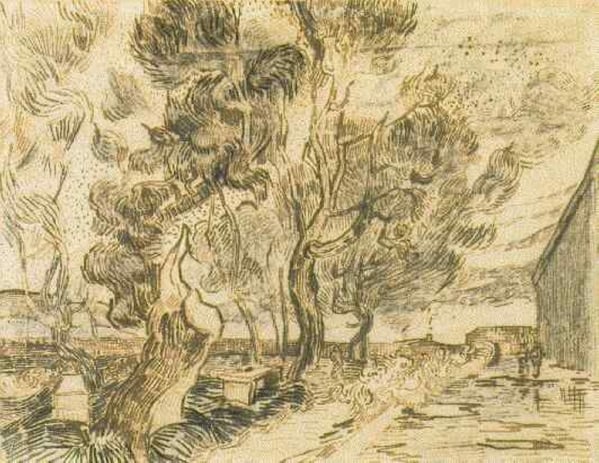
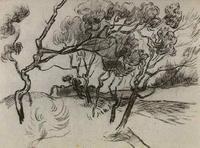
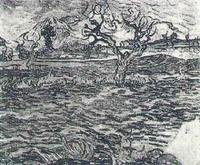
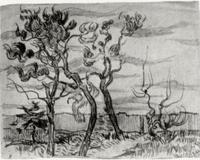
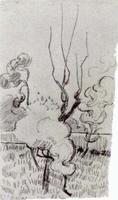
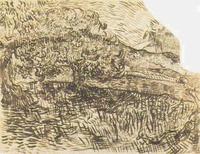
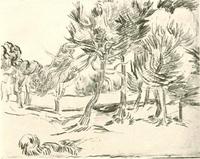
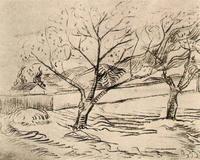
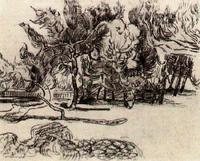
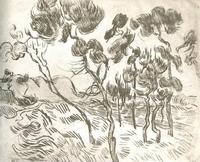
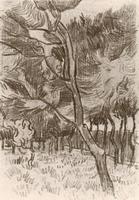
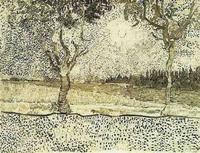
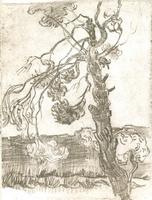
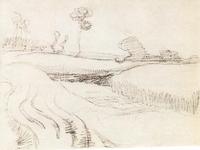
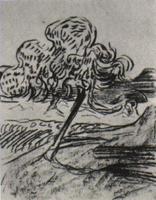
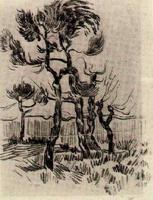
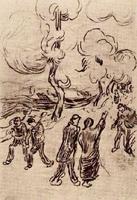
This artwork, a sketch and study from Vincent van Gogh’s Post-Impressionist period, is significant for its raw, unmediated expression of emotional intensity. As a study, it reveals van Gogh’s process of translating direct observation into a personal, symbolic language—a hallmark of Post-Impressionism. The “heavy, sawn-off tree” becomes a potent motif: its truncation suggests themes of mutilation, endurance, and the stark reality of the asylum’s garden, while van Gogh’s vigorous, distorted lines convey psychological turmoil rather than mere topographical accuracy. This piece exemplifies how Post-Impressionist artists prioritized subjective feeling over naturalistic representation, making the mundane (a corner of a garden) a vehicle for profound human experience.