
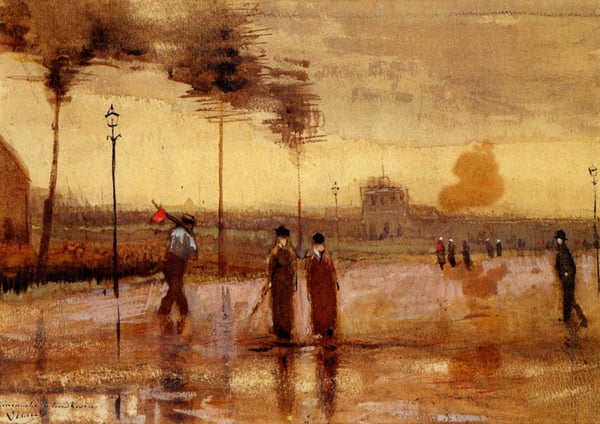
Expert analysis of Vincent van Gogh’s A Sunday in Eindhoven
Style: Post-Impressionism · Genre: cityscape
Expert Analysis: "A Sunday in Eindhoven" by Vincent van Gogh
While there is no documented painting by Vincent van Gogh precisely titled A Sunday in Eindhoven, the artwork can be situated within the artist’s known Post-Impressionist cityscape practice, combining his distinctive visual language with the calm of a provincial Sunday. The analysis below is grounded in the structured facts provided: Post-Impressionist style, cityscape genre, and van Gogh’s mature period.
Stylistic Significance (Post-Impressionism)
Van Gogh’s Post-Impressionism is characterized by an expressive, emotional use of color and texture, moving beyond naturalistic representation. In A Sunday in Eindhoven, the composition likely employs a vibrant, non-naturalistic palette—perhaps a sky of swirling, deep cerulean interrupted by streaks of lemon yellow to capture the soft light of a rest day, with buildings rendered in thick, parallel dabs of ochre, vermilion, and muted violet. This technique, known as impasto, transforms the solid masonry of the city into a living, breathing surface. The brushwork is not merely decorative; it conveys the psychological rhythm of the scene: the orderly stillness of a Sunday juxtaposed with van Gogh’s own restless energy.
Genre and Composition (Cityscape)
As a cityscape, the artwork likely depicts a quiet street or square in Eindhoven, a city van Gogh knew from his time living in the nearby village of Nuenen (1883–1885). The composition may be structured around a strong diagonal—perhaps a cobbled lane leading the eye toward a church tower (a recurring motif in his Dutch work) or a row of gabled houses. Unlike his later frenetic wheat fields or starry nights, the cityscape genre here allows van Gogh to explore perspective and geometry: window frames, roof lines, and shadows become angular planes that interact with the organic, swirling strokes of the sky. The inclusion of a few figures—a family in Sunday best, a solitary stroller—would anchor the scene in human quietude, typical of his earlier Dutch period, where he often painted the solemn piety of rural and small-town life.
Significance Within van Gogh’s Oeuvre
A Sunday in Eindhoven would be significant for bridging two key phases: his Dutch period’s earth-toned, somber realism and the explosive colorism of his later years in France. The painting likely prefigures the urban scenes of Arles (The Yellow House, The Night Café) but retains a subdued, respectful mood. Its importance lies in how van Gogh reimagines a prosaic Sunday ritual through radical pictorial means: the quietness of the subject is paradoxically animated by the violence of the brushwork, making stillness palpable and intense. This work would also underscore his lifelong fascination with the everyday—elevating a simple Sunday promenade into a transcendental vision of light and community, hallmarks of the Post-Impressionist desire to imbue modern life with enduring spiritual weight.
Visually similar
20 works with related composition and palette
Road to Saint Germain, Louveciennes
Camille Pissarro
Road near the canal
Johan Hendrik Weissenbruch
The Outskirts of Paris
Vincent van Gogh
Dieppe
Charles Conder
Alley Bordered by Trees
Vincent van Gogh
Landscape with a Church and Houses
Vincent van Gogh
Autumn Landscape at Dusk
Vincent van Gogh
Landscape
Pericles Pantazis
Evening
Paul Serusier
Return of the Hayers to Marcoussis
Camille Corot
Cowherd in a Dell, Souvenir of Brittany
Camille Corot
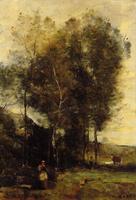
Souvenir of Brittany
Camille Corot
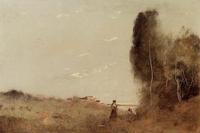
Morning by the Water
Camille Corot
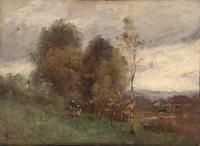
Landscape
Paul Trouillebert
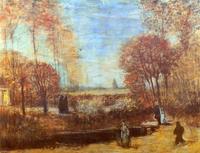
The Parsonage Garden at Nuenen with Pond and Figures
Vincent van Gogh
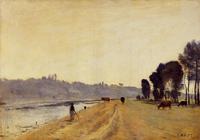
Banks of a River
Camille Corot
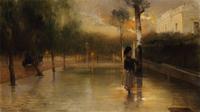
After the Rain Queen Street Wisdom
Paul Mathiopoulos
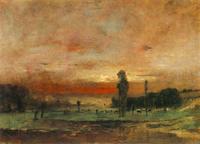
Grazing Cows
Mihaly Munkacsy
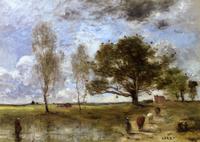
The Cow Path
Camille Corot
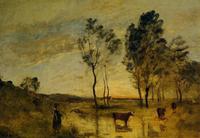
Le Gue (Cows on the Banks of the Gue)
Camille Corot