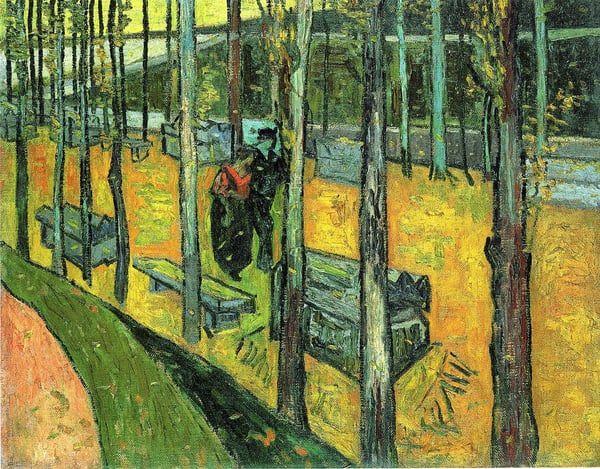
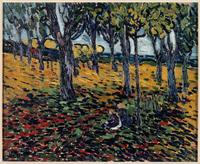
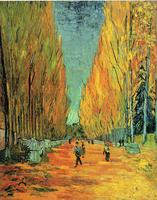
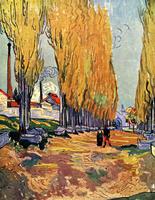
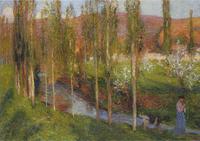
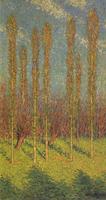
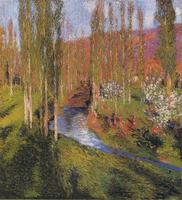
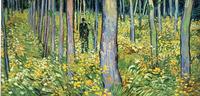
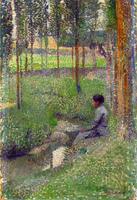
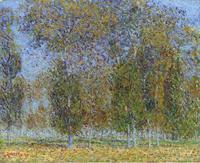
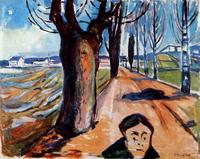
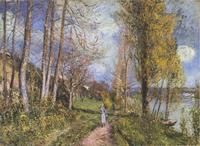
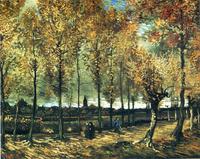
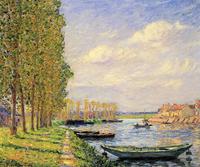
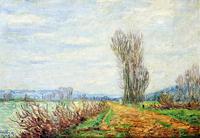
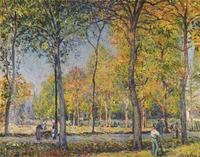
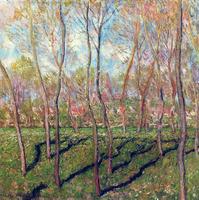
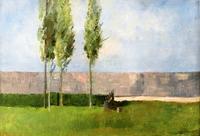
"Alychamps, Autumn" is a masterful example of Vincent van Gogh’s Post-Impressionist vision, painted in 1888 during his prolific period in Arles. As a genre painting, it transforms a mundane view—the ancient Alyscamps necropolis—into a vibrant, emotional landscape. Van Gogh breaks from Impressionist fidelity to natural light by employing thick, rhythmic impasto and intensely saturated complementary colors (the blazing yellow-orange leaves against violet shadows and blue sky). This technique elevates the scene beyond mere documentation, channeling his inner turbulence and spiritual connection to nature. The work’s significance lies in its synthesis of personal expression with the structured, symbolic use of color and brushwork that defined Post-Impressionism, marking a bold step toward modern art’s emphasis on subjective experience over objective representation.