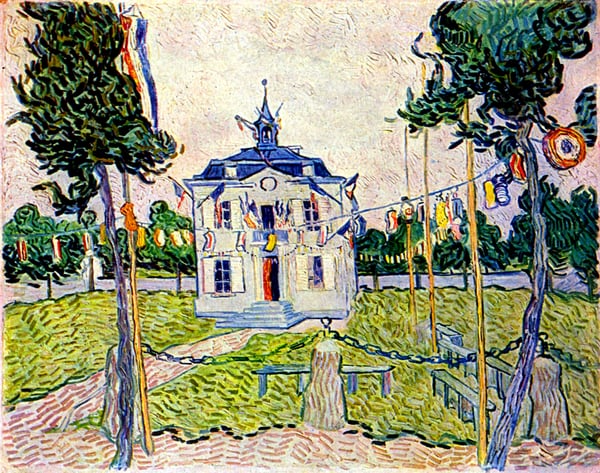
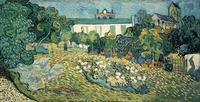
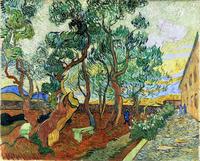
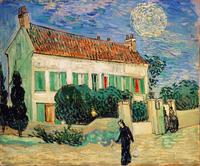
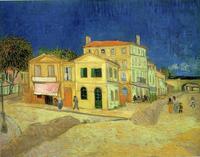
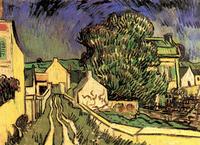
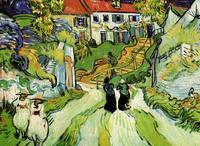
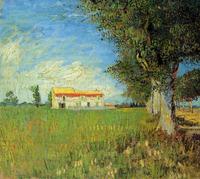
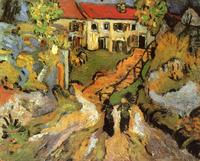
This cityscape by Vincent van Gogh exemplifies Post-Impressionism’s departure from naturalistic representation toward emotional and symbolic expression. The painting’s significance lies in how the artist transforms a specific civic event—the Bastille Day celebration in Auvers—into a vibrant, subjective experience. Using the Post-Impressionist vocabulary of intensified color, visible brushwork, and compositional tension, van Gogh elevates the ordinary town hall scene into a charged visual statement. The genre of cityscape here is not merely descriptive; it becomes a vehicle for conveying the energy, festivity, and underlying psychological intensity that characterize his mature period. Within the broader Post-Impressionist movement, this work stands as an example of how artists relocated the significance of a subject from external reality to internal feeling, marking a crucial step toward the expressive freedoms of later modern art.